

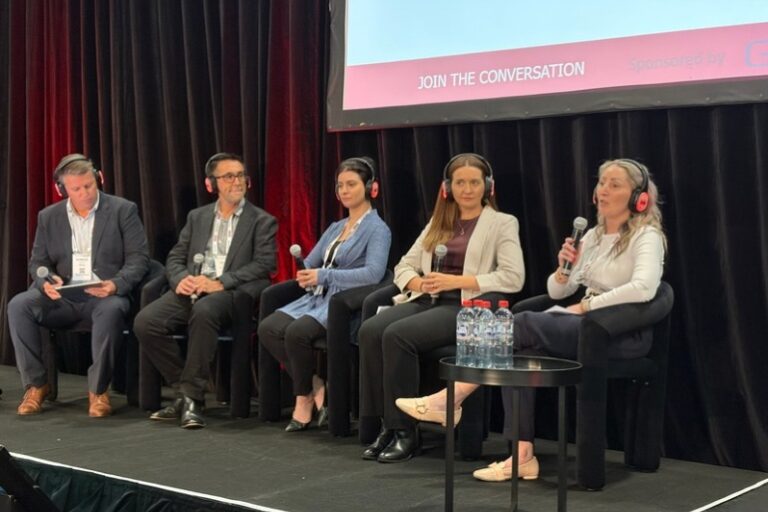
Fleet managers are being encouraged to challenge traditional procurement practices and ask a simple question before replacing an asset: Do we actually need it?
Speaking at MOVE Australia 2026, Shannyn Garrett, Procurement Manager – Property & Fleet at Serco, suggested that too many organisations continue to replace vehicles and equipment based on historical purchasing patterns rather than current operational requirements.
“Well, firstly, I think we need to ask the question: Do we actually need the asset?” Garrett said.
“A lot of the time, that’s where we go wrong. We reorder the same piece of equipment because that’s what we’ve always had.”
The comments came during a panel discussion exploring how fleet procurement needs to evolve beyond purchase price to consider utilisation, operational requirements, safety, compliance and whole-of-life costs.

The cheapest vehicle isn’t always the best decision
Garrett explained that in organisations where fleet is not the primary business activity, purchasing decisions can be dominated by upfront costs rather than the long-term financial implications.
“The cheapest priced on the spreadsheet usually tick the boxes of the people in finance,” Garrett said.
“They were only looking at the upfront price, and then they weren’t hearing two, three years later that it’s actually the highest cost asset that we have.”
She suggested that organisations where vehicles are central to service delivery, such as transport companies, are often more mature in their approach to total cost of ownership.
However, the decision to purchase, lease or share an asset should depend on the business model rather than a standard procurement policy.
“For some companies, capital will work. For some companies, lease will work. So I really think it depends on the business model and finding the right fit for your business,” Garrett said.
Fleet management starts before procurement
Christine Walley, Fleet Strategy Specialist at Thiess, reinforced the importance of understanding how an asset will be used before committing to a purchase.
For fleet managers, the decision involves much more than comparing vehicle specifications and negotiating a price.
“What use is that asset going into? What environment? Is it fit for purpose for that environment?” Walley asked.
She explained that procurement decisions must also consider maintenance strategies, utilisation, driver behaviour, repair costs, replacement timing and eventual disposal.
These factors determine whether an asset delivers value throughout its operational life.
Moving beyond the replacement cycle
Paul Hopwood, Team Leader – Supply Chain & Logistics at Icon Water, highlighted how traditional fleet management structures can contribute to poor procurement decisions.
He explained that fleet management had historically been treated as an administrative function, with responsibility focused on registrations, insurance, fuel bills and vehicle renewals rather than strategic oversight.
“There wasn’t a key person,” Hopwood said, highlighting the lack of strategic ownership in some organisations.
He suggested that the profile of fleet management is now increasing as organisations recognise the importance of having someone responsible for the bigger picture.
This change is particularly important when considering underutilised assets, where the cost of poor purchasing decisions can remain hidden across different business units.
Using data to make better decisions
While fleet managers now have access to more information than ever before, Walley questioned whether organisations are using that information to influence their decisions.
“Is it changing conversations? Is it changing how you order vehicles? Is it changing when you replace vehicles? Is it changing the sort of vehicles you order or the way you use them on site?” she asked.
The challenge is not simply collecting fleet data, but using it to improve asset utilisation, challenge replacement requests and support better investment decisions.
For fleet managers looking to increase their organisation’s level of fleet management maturity, the message from the panel was clear.
A replacement schedule should not automatically become a shopping list.
Before requesting quotes, comparing finance options or selecting the next vehicle, fleet managers should be working with operational teams to understand what is actually required.
Sometimes the smartest procurement decision could be not buying another vehicle at all.