

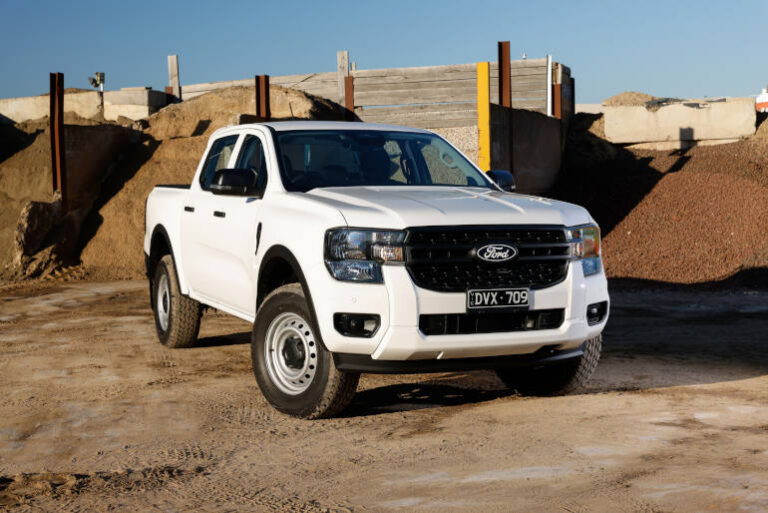
Ford Australia’s new conditional seven-year unlimited-kilometre warranty could have particular value for fleets that accumulate kilometres quickly, changing the calculation around warranty coverage, servicing and vehicle replacement cycles.
The program applies to eligible new and demonstrator vehicles delivered from 1 September 2026. To retain the seven-year coverage, scheduled servicing must be completed through a Ford dealer within the required intervals, with normal warranty conditions and exclusions applying.
For fleet operators, however, the key part of the announcement is not necessarily the seven-year term. It is the removal of a kilometre limit.
Ford Customer Service Division Director Greg Davidson announced the warranty program at the Ford Uncovered event.
“For vehicles delivered from the 1st of September 2026, Ford is bringing in a seven-year unlimited kilometer warranty for customers in Australia when they service at Ford.”
For a high-utilisation fleet, unlimited kilometres can materially change the value of the warranty.
Vehicles travelling large annual distances can reach the kilometre limits attached to conventional warranties well before the end of their planned replacement cycle. An unlimited-kilometre warranty instead allows eligible vehicles to remain covered according to their age.
That could be particularly relevant for sales fleets, service vehicles, regional operations and other applications where annual kilometres can be substantially higher than the typical private vehicle.
Servicing becomes part of the calculation
The additional warranty coverage is not automatically a whole-of-life cost saving.
Because maintaining eligibility requires scheduled servicing through the Ford dealer network, Fleet Managers need to consider how that requirement fits with their existing maintenance arrangements.
Fleets operating their own workshops, using independent service providers or working under existing maintenance contracts will need to compare the potential warranty benefit against servicing costs, travel requirements and vehicle downtime.
For some fleets the arrangement may fit easily into their existing operating model. For others, particularly those with geographically dispersed vehicles, the cost of maintaining warranty eligibility could reduce its value.
Warranty coverage could remain at disposal
Ford is also positioning the longer warranty as a potential benefit when vehicles reach the used market.
Many fleets operate vehicles for three to five years before replacement. A seven-year warranty therefore creates the possibility that significant manufacturer coverage could remain when the vehicle is sold.
Michael Elias, General Manager – Ford Pro Australia, said Ford expects that to have an impact on residual values.
“Now, with our extended warranty, it means there are still many years left, and we feel that that will actually translate into an RV lift.”
It is an argument Fleet Managers and leasing providers are likely to watch closely.
Remaining manufacturer warranty can make a used vehicle more attractive by reducing some of the perceived risk for the next owner. But whether it produces a measurable residual-value improvement will ultimately depend on the used vehicle market.
Vehicle condition, kilometres travelled, supply, replacement vehicle pricing and buyer demand will all continue to influence disposal values.
Dealer access will matter
Ford says its service network includes more than 220 outlets, while the expansion of mobile servicing through Ford Pro is also intended to increase servicing flexibility.
That network could make the dealer-servicing requirement relatively straightforward for fleets already operating close to Ford service locations.
For regional, remote or highly specialised fleets, service availability deserves closer examination.
A seven-year warranty has less operational value if maintaining coverage requires substantial vehicle travel, additional downtime or disruption to an established maintenance program.
The fleet calculation therefore needs to go beyond simply comparing a seven-year warranty with a shorter alternative.
Procurement teams should consider annual kilometres, planned replacement timing, scheduled servicing costs, workshop access and how much warranty is likely to remain when the vehicle is disposed of.
For high-kilometre fleets in particular, the unlimited-kilometre component has the potential to be significant. The real value will depend on whether Ford’s servicing requirements align with the way each fleet actually operates.