

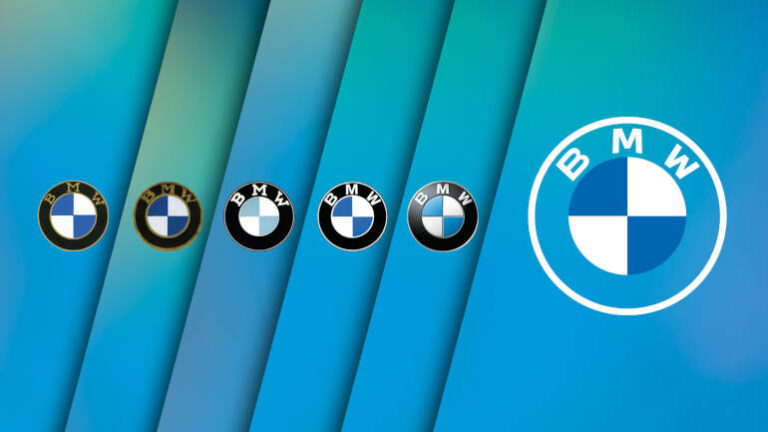
For more than a century, BMW’s blue-and-white roundel has been one of the automotive industry’s most recognisable symbols, but the story most people associate with its creation is not quite right.
Despite the long-standing belief that the BMW logo represents a spinning aircraft propeller, the company says the roundel was actually created from elements of predecessor Rapp Motorenwerke’s identity and BMW’s Bavarian roots.
The BMW trademark was registered in 1917, shortly after Bayerische Motoren Werke GmbH was established as the successor to Rapp Motorenwerke GmbH.
Rather than developing an entirely new identity, BMW retained the black outer ring used by Rapp and added the blue-and-white quadrants associated with Bavaria.
The colours reflected the company’s origins in Munich and Bavaria, although trademark regulations at the time prevented the Bavarian state colours from being reproduced exactly as they appeared on the flag.
So where did the propeller story come from?
The connection with aviation arrived more than a decade later.
In 1929, when BMW was producing aircraft engines, an advertisement showed the BMW roundel positioned inside a rotating aircraft propeller.
It was an effective piece of marketing and helped establish a visual link between BMW and aviation engineering. The association became even stronger during the 1940s when a BMW company publication again connected the roundel with aircraft propellers.
The timing is important.
BMW says historical research shows the logo existed before the company’s first flight-tested aircraft engine, ruling out the propeller as the original inspiration.
Instead, what started as an advertising image developed into one of the automotive industry’s most persistent brand stories.
More than a badge
For fleet operators, badges are normally secondary to whole-of-life cost, safety, reliability and operational suitability. But automotive branding also plays an important role in residual values, employee vehicle choice and the perception of vehicles used to represent an organisation.
BMW’s roundel demonstrates how successfully a manufacturer can build consistency around a visual identity over generations of vehicles.
The badge appeared on the BMW R 32, the company’s first motorcycle, in 1923. Six years later came the advertisement that created the propeller association, while a 1942 company publication helped cement that interpretation.
Today, BMW describes the roundel as representing its Bavarian heritage, innovation and global premium positioning.
More than 100 years after it was registered, the logo has changed subtly in presentation but remains immediately recognisable.
The propeller explanation may have become the better-known story, but the origins of the BMW badge are actually much simpler: a link between a new company, its predecessor and the place it called home.