
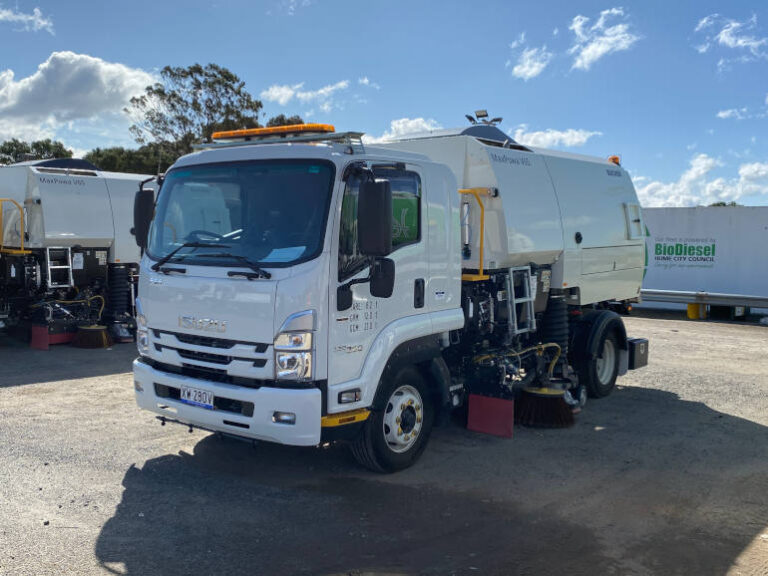
When an operational team says it needs another vehicle, the obvious fleet question is: why? For specialised plant such as street sweepers, answering that question can be difficult.
The existing vehicles may be recording significant operating hours. Overtime may be increasing. Maintenance costs may be rising. And despite all that activity, the organisation may still struggle to complete its street-sweeping program.
Does that mean the fleet is too small? Not necessarily.
Geosecure National Fleet Consultant Travis Weir believes better operational information can help Fleet Managers distinguish between a genuine capacity problem and an inefficient operating model.
It is one of the issues Geosecure is exploring through Optimize, an AI-powered route optimisation solution being developed for applications including local government street sweeping.
Right-sizing requires more than utilisation data
Fleet right-sizing is often built around utilisation, kilometres and operating hours. Those measures remain important, but a specialised asset also needs to be assessed against the service it exists to deliver.
During a demonstration of Optimize’s street-sweeping application, Weir showed how route and telematics information could be used to compare the number of streets scheduled, streets actually swept and the proportion of time a vehicle was performing productive sweeping work.
That prompted a straightforward fleet question: how many street sweepers does an organisation actually need? Weir said existing data could contribute directly to that decision.
It potentially changes the conversation from How busy are our sweepers? to What level of fleet resource is required to achieve the agreed service?
Finding the cost of inefficient routing
The distinction matters because operating hours come with costs.
If a street sweeper travels repeatedly between different parts of an LGA, the organisation is consuming fuel, operator time and vehicle life without delivering the same amount of sweeping it could achieve with a more efficient route.
When breakdowns occur, the effect can compound. A vehicle that is unavailable creates a backlog. Operators then need to catch up, potentially increasing hours on the remaining equipment.
Weir described the cycle during the discussion.
“So then they don’t get out and service that area. So they’re playing catch up all the time, and then because they’re doing more hours in the street sweeper, it’s causing it more dramas.”
Telematics can potentially add fuel use and trip costs to that operational picture, allowing fleet and operations teams to see the cost attached to different ways of delivering the service.
In-house fleet or contractor?
Better information can also support a much bigger strategic decision. Should the service be provided internally at all?
Weir said councils had already raised that question during discussions about the technology.
“There’s other councils that have come to us and said, can I use it to see whether we maintain this service internally still, or do we bring in a contractor and then we would have our contractor use this so we can see whether they’re compliant to the SLA.”
That creates a common measurement framework for either model.
Instead of comparing an internal fleet and an external contractor primarily on hourly rates or annual expenditure, councils could potentially compare both against the actual service requirement.
How much of the network was completed? Were streets serviced at the required frequency? How much travel was required? What fleet capacity was needed? And was the agreed service level achieved?
Those questions provide Procurement Managers and Fleet Managers with a stronger basis for evaluating alternative delivery models.
Fleet information needs to leave the fleet department
There is also an organisational challenge. Street sweepers illustrate how responsibility for an asset can be spread across multiple parts of a council.
Fleet may own and maintain the vehicle. Another department may hold the operating budget. An operations team may control the daily work. Community expectations determine the required service.
Weir said Optimize therefore isn’t solely a fleet product.
“It’s more organisational. It should be more operations driven. So the Fleet Manager could definitely use it from a understanding right-sizing a fleet and how fleet’s performing, but it’s more a service level management tool for the organisation.”
That may be one of the more important implications for Fleet Managers. Fleet data becomes much more valuable when it is combined with information about the work the asset is expected to perform.
Rather than simply reporting fuel, maintenance, utilisation and replacement costs, fleet teams can help operational managers understand how assets contribute to a service outcome.
Don’t solve an efficiency problem with another asset
There will always be situations where growing workloads justify another vehicle. But an additional street sweeper is an expensive way to solve a routing problem.
Before increasing fleet size, the first step should be understanding what the existing assets are doing, where their operating hours are being consumed and whether the current schedule represents the most efficient way of achieving the required service level.
Better fleet right-sizing isn’t necessarily about reducing vehicle numbers.
It’s about having enough evidence to know when an additional vehicle is genuinely required — and when better planning could achieve the same result with the fleet already available.
- Inside the NRMA fleet team: managing diversity, data and the EV transition
 Managing fleet at the NRMA involves much more than keeping roadside patrol vehicles moving. Fleet Manager Jai O’Keefe and his small team are responsible for approximately 450 vehicles supporting businesses across New South Wales, South Australia and Tasmania. The majority are roadside patrol vehicles, supported by tilt-tray and cradle tow trucks. However, the fleet also
 - IVECO S-Way Takes the ReinsSafety, driver comfort and ease of operation are proving just as important in specialist transport as they are in large commercial fleets, with amateur show jumper Peter Carcary choosing an IVECO S-Way AS 550 to move valuable horses around Australia. Carcary travels to around 25 equestrian events each year, towing a 48-foot Premier horse float
- Novated Leasing Becomes a New Battleground for Car BrandsMcMillan Shakespeare Group (MMS) is expanding its relationships with major automotive brands as novated leasing becomes an increasingly important sales channel for new vehicles, particularly electric vehicles. The salary packaging and fleet services group has strengthened partnerships with BYD, Denza, GWM, MG Motor and GAC Group, alongside finance relationships with Volkswagen Financial Services Australia covering
- From Administering Chaos to Managing Strategy: How Sunwater Transformed Its Fleet FunctionMany fleet teams spend their days responding to problems rather than managing assets. Vehicles break down. Drivers need replacements. Orders are delayed. Suppliers are blamed. Emails pile up. According to Dan Cassidy, Fleet Lead at Sunwater, that’s not fleet management. Over the past two years, Sunwater has transformed its fleet operation into a strategic and
- IVECO Daily Takes Motorcycle Business Up a GearBoutique motorcycle service and repair business Squily’s Moto has replaced its utility with an IVECO Daily 35S van, using the vehicle as a mobile workshop, recovery vehicle, delivery van and day-to-day business transport. Based in regional Western Australia, Squily’s Moto began as a hobby for owner John Lizamore before growing into a business providing motorcycle