

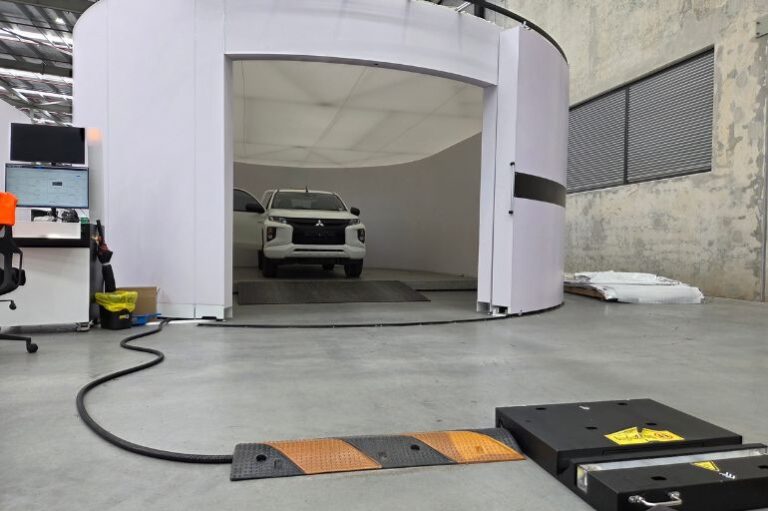
Manheim Australia is introducing new vehicle imaging, scanning and auction technology designed to give buyers a clearer view of vehicles before they bid.
For fleets disposing of passenger vehicles, light commercial vehicles and other assets, the investment could help improve sale results by reducing uncertainty around vehicle condition and presentation.
The technology is being introduced as part of Manheim’s broader upgrade of its Australian facilities, beginning with the new TradeCoast site in Brisbane.
Better images support stronger bidding decisions
One of the most important changes for fleet sellers is the introduction of new Detectary photo booths.
The Brisbane facility is Manheim’s first Australian site to use the booths, which capture under-vehicle images as well as 360-degree interior and exterior photography.
The aim is to create clearer, more detailed and more consistent vehicle images for buyers reviewing assets online.
This matters because many auction buyers make decisions remotely. They may not inspect every vehicle in person, particularly when bidding across multiple locations or managing a high volume of purchases.
When photographs are inconsistent or important areas of a vehicle are difficult to see, buyers may allow for the uncertainty in their bids. More complete visual information can give them greater confidence when assessing condition and calculating how much they are prepared to pay.
For the seller, that confidence may translate into more competitive bidding and a stronger sale result. It does not guarantee a higher price, but it can reduce some of the uncertainty that may cause buyers to bid conservatively.
Under-vehicle photography adds another level of detail
The ability to view the underside of a vehicle is a significant addition to the online inspection process.
Traditional auction photography generally focuses on the exterior panels, cabin, odometer and visible damage. Under-vehicle images can provide buyers with additional information about areas that are difficult to assess through standard photography.
For commercial vehicles and fleet assets, this may be particularly useful where buyers are considering wear, previous use and the likely cost of preparing the vehicle for resale or operation.
The technology also allows Manheim to present vehicles in a more standardised way. Buyers can compare assets using a similar set of images rather than relying on photographs taken from different angles, in different lighting or with varying levels of detail.
That consistency can support faster decision-making and may encourage buyers to participate in more auctions without needing to inspect every vehicle physically.
Damage detection technology is also planned
Manheim said new damage detection tunnels will also be introduced as part of its technology investment.
The purpose of this technology is to improve the way vehicle condition is identified and recorded before an asset is offered for sale.
Accurate condition information is important for both buyers and sellers. Buyers need confidence that visible damage has been identified, while sellers need vehicles to be represented fairly so that minor issues do not create unnecessary uncertainty.
Automated or assisted damage detection can help create a more consistent inspection process, although it remains important that fleets review condition reports and understand how vehicles are being assessed.
For Fleet Managers, the quality of condition information can affect both the sale price and the speed of disposal. A vehicle that is presented clearly and accurately may attract more serious bidding than one with limited photographs or unclear condition details.
Improved live auctions for online buyers
Manheim’s new Brisbane site also includes upgraded technology for live auction simulcasts.
The facility has two auction lanes, each with two auction boxes that can operate at the same time. Large screens, high-definition cameras and upgraded audio systems support buyers participating online.
Manheim said early customer feedback included positive comments about the sound quality of the online auction experience.
Reliable video and audio are practical parts of buyer confidence. If online participants cannot clearly hear the auctioneer, follow the bidding or see the vehicle as it moves through the lane, they may hesitate or stop bidding.
A smoother online experience can help keep remote buyers engaged, broadening the potential buyer pool available to fleet sellers.
Presentation remains important
Technology can provide buyers with more information, but it does not replace the basics of asset preparation.
Vehicle condition, service history, cleanliness, documentation and the timing of the sale will continue to influence the result.
Manheim’s TradeCoast facility includes detailing bays and a workshop with six hoists for inspections. These capabilities support the process of preparing and presenting vehicles before auction.
For fleets, the strongest results are likely to come from combining accurate digital information with effective vehicle preparation and a clear disposal strategy.
The value of the new technology will therefore depend on how well it is used throughout the remarketing process, from inspection and photography through to listing, auction and settlement.
Building trust between buyers and sellers
Cox Automotive Australia CEO Stephen Lester said the investment was intended to improve Manheim’s operational capabilities across its customer base.
“These significant and exciting capital investments demonstrate Manheim’s commitment to excellence for our thousands of buyer and seller partners across the automotive, salvage and industrial sectors, and will take our operational capabilities to new heights,” Lester said.
“Modern, future-proof, newly built and with long-term leases, these facilities demonstrate our commitment to the Australian market as a leading asset auctioneer and will give our people an even better day-to-day working experience to boot.”
For fleet sellers, the potential benefit is straightforward: better information can make it easier for buyers to assess risk.
When buyers have detailed photographs, clearer condition information and a reliable online auction experience, they may be more comfortable bidding closer to the value they place on the asset.
The result should be a more transparent sale process, although final returns will still depend on vehicle condition, buyer demand and market conditions.
Manheim’s investment shows how technology is becoming increasingly important in fleet remarketing, not simply as an administrative tool, but as a way to improve presentation, expand buyer participation and support stronger competition for assets.