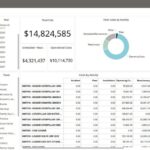


In many fleets, incident reporting remains one of the least modernised processes in an otherwise technology-enabled operation. Paper forms, email trails and spreadsheets are still used to record vehicle damage and accidents. While familiar, these methods introduce friction, inconsistency and data gaps that undermine cost control and risk management.
According to Shaun Janks, Co-Founder and Chief DingGo at DingGo, manual reporting processes are one of the key reasons fleets struggle to capture complete incident data.
“When reporting relies on paper or email, there are built-in barriers,” Janks says. “If logging an incident feels time-consuming or inconvenient, especially for minor damage, it simply doesn’t happen consistently.”
Paper-based systems create practical obstacles. Drivers may delay completing forms for low-level damage if the vehicle remains operational. Fleet teams are then left chasing information, manually re-entering data and storing documents. Over time, this administrative burden discourages compliance.
“It’s not that people don’t care,” Janks explains. “It’s that friction changes behaviour. The harder something is to do, the less likely it is to be done properly.”
Moving to a digital portal removes much of that friction. When incidents can be logged quickly via a central system, reporting becomes embedded in normal operations rather than treated as a separate task.
“When reporting is simple and accessible, compliance improves almost immediately,” Janks says. “That shift alone changes the quality of the data.”
The behavioural impact is significant. Drivers are more likely to report incidents promptly when expectations are clear and the process is straightforward. Fleet managers gain real-time visibility, enabling faster responses and more structured follow-up.
“Digital reporting shortens the gap between an incident occurring and it being managed,” Janks notes. “That improves control.”
Digitisation also improves data consistency. Paper forms often result in incomplete details, inconsistent terminology or missing information. Digital systems standardise inputs, ensuring key fields are captured every time.
“Consistency is what makes data usable,” Janks says. “Without standardisation, you can’t reliably analyse trends.”
With complete and structured data, fleets can move beyond reactive case-by-case management. Patterns become visible — recurring low-speed impacts, specific damage types, or locations where incidents occur more frequently. That insight supports targeted interventions such as driver coaching or operational adjustments.
“Once the data is centralised, patterns appear quickly,” Janks says. “That’s when fleets move from reacting to incidents to actively reducing them.”
Digitised reporting also improves collaboration across departments. Information that was previously buried in filing cabinets or email threads becomes visible to procurement, insurance and finance teams.
“When everyone can see the same data, conversations become more constructive,” Janks explains. “Procurement can evaluate vehicle performance, insurance can assess risk exposure, and fleet can connect operational behaviour to cost.”
Accountability also shifts. Paper-based processes often leave uncertainty about when damage occurred or who was driving. Digital systems create time-stamped records that protect both drivers and the organisation.
“A clear digital timeline removes ambiguity,” Janks says. “It supports fair processes rather than finger-pointing.”
Importantly, Janks emphasises that logging an incident does not obligate immediate repair.
“Recording is about visibility,” he says. “You can choose to repair immediately, defer or plan for end-of-life remediation — but the decision is informed rather than reactive.”
From a governance perspective, digital records are searchable, auditable and secure. As scrutiny from executives, auditors and insurers increases, the ability to demonstrate structured oversight becomes more valuable.
“Governance expectations are rising,” Janks says. “If you can’t produce reliable records quickly, that becomes a risk in itself.”
Ultimately, the transition from paper to portal changes behaviour because it removes excuses. When reporting is easy, expectations rise. When information is visible, accountability strengthens. And when data is reliable, decision-making improves.
“Technology doesn’t just make reporting faster,” Janks concludes. “It shapes behaviour. And in fleet management, behaviour drives outcomes.”
For fleets seeking greater maturity, improved cost control and stronger governance, digitising incident reporting is more than an efficiency upgrade. It is a structural shift that transforms how incidents are understood, managed and used to drive better performance.
- Finalists announced for 2026 Novated Lease Car of the YearFleet News Group has announced the three finalists for the 2026 Novated Lease Car of the Year, presented in partnership with the National Automotive Leasing and Salary Packaging Association (NALSPA). The finalists are: Unlike the other Fleet Car of the Year categories, the Novated Lease Car of the Year finalists are selected using real-world market data from
- Fleet Maintenance Finally Goes Digital
 Fleet maintenance has spent decades relying on telephones, emails and manual approval processes, even as almost every other area of business has moved online. FleetGuru.ai CEO and Co-Founder Eden Shirley believes that is finally changing. FleetGuru.ai has built a platform designed to connect workshops, service providers, fleet management companies and fleet managers in one digital
 - Why the cheapest truck isn’t always the cheapest truck for Parkes Shire CouncilParkes Shire Council is a finalist in the Fleet of the Year category in the 2026 Fleet News Group Awards. Its approach to fleet purchasing goes well beyond tender price, using actual operating costs, whole-of-life analysis and documented financial tests to decide whether an asset should be repaired, replaced or disposed of. The fifth story
- Ford reveals its plan to remain relevant in Australia through 2030Ford Australia has used its Ford Uncovered event in Melbourne to outline a broader product and market strategy that stretches well beyond the vehicles revealed on the day. The headline ambition is to increase the proportion of the Australian new-vehicle market covered by Ford products to more than 60 per cent within three years, while
- Why DingGo is backing the Fleet News Group AwardsFleet organisations may operate different vehicles, provide different services and face very different operating conditions, but many fleet managers are trying to solve the same fundamental problems. Reducing costs. Improving safety. Keeping vehicles on the road. Working effectively with suppliers. And finding better ways to measure performance. It is one of the reasons DingGo was