
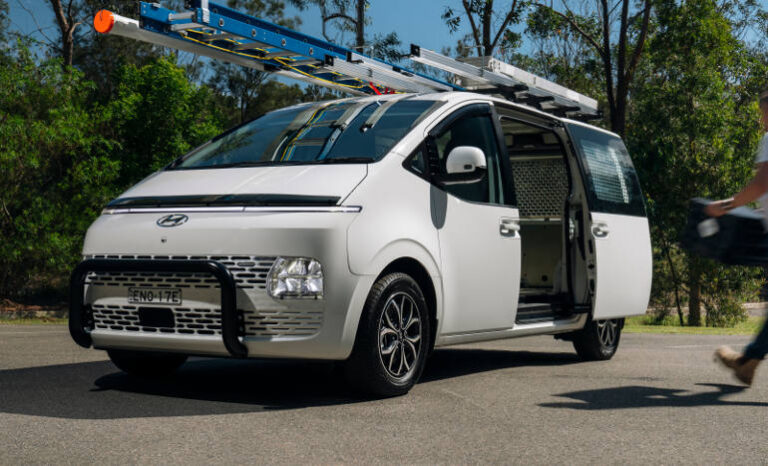
In a market where utes dominate sales, vans still make more sense for many fleets. For couriers, tradies and service operators, the extra cargo space, lower running costs and driver-friendly cabins give them an edge.
We put three of Australia’s most popular mid-size vans to the test: the Ford Transit Custom, the Renault Trafic and the Hyundai Staria Load.
Comfort and Tech
The Transit Custom feels the most car-like, with heated, adjustable seats, armrests and a 13-inch SYNC 4 system. The Trafic surprises with its premium-feeling cabin and clever fold-down seat that doubles as a laptop workstation. Meanwhile, the Staria Load looks and feels futuristic, with an SUV-like driving position, overhead storage, and wireless charging.
Engines and Efficiency
All three are diesel-powered, but differ slightly in output and efficiency:
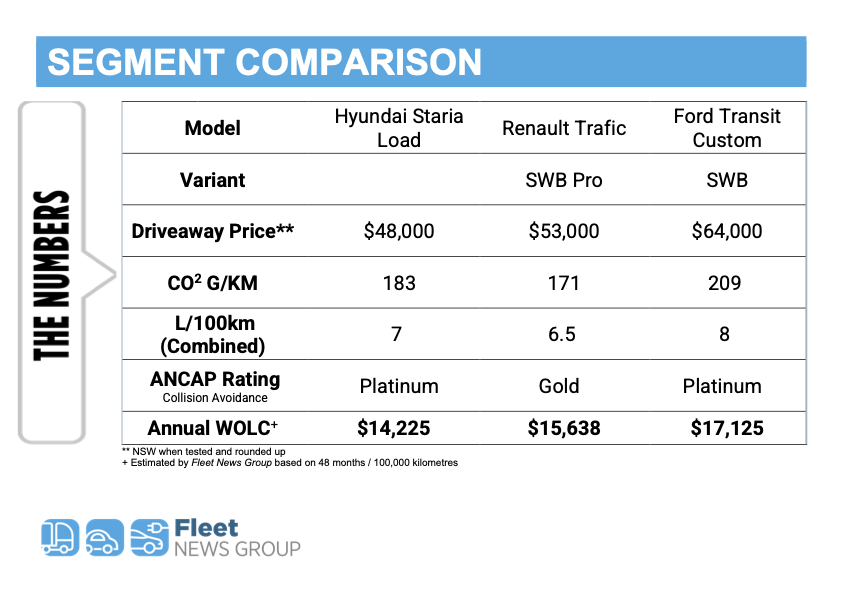
- Transit Custom: 2.0L, 125kW/390Nm, 8.0L/100km (real-world closer to 7.2).
- Trafic: 2.0L, 125kW/380Nm, 7.2L/100km (manual) or 6.5L/100km (auto).
- Staria Load: 2.2L, 130kW/430Nm, 7.0L/100km.
Emissions are all competitive, with the Hyundai leading on paper at 183g/km CO₂.
Cargo and Capability
For cargo, the Transit Custom and Trafic both offer 5.8m³ in short wheelbase, while the Staria Load makes do with 4.9m³ but wins points for its flat, wide floor. Renault’s clever load-through flap extends to 3.75m, making it the best for long items. Payloads range from 1,072kg (Staria) to over 1,200kg (Transit and Trafic). All three tow up to 2,500kg, though the Trafic auto is limited to 1,680kg.
Driving and Safety
On the road, the Transit Custom delivers sharp handling and a tight turning circle. The Trafic feels composed with smart lane departure warnings, while the Staria Load surprises with SUV-like refinement and smooth ride quality.
Safety is strong across the board: Ford offers adaptive cruise and blind spot assist, Renault includes AEBS and driver attention alerts, and Hyundai leads with its SmartSense suite and blind spot camera view in the cluster.
Verdict
All three vans are excellent fleet options. The Trafic is the cleverest for load flexibility, the Staria Load feels the most refined, but the Transit Custom edges ahead on driver comfort and tech.
“All would be an excellent choice for tradies, couriers and fleets alike. But for me, the Transit… makes it the winner in this comparison.“
- Whole-of-Life Winner? Triton Makes Its Move
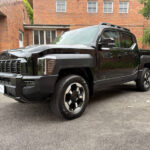
 Three of Australia’s top four best-selling vehicles are 4×4 utes — Ford Ranger, Toyota HiLux and Isuzu D-Max. So where does the Mitsubishi Triton sit in that pecking order for fleet buyers in 2025? The real question isn’t styling or badge appeal. It’s whole-of-life cost, suitability and return on investment. And that’s where Triton makes its case. Whole-of-Life Costs:
 - Kia Tasman X-Line Review: Different by Design, but Is It Right for Fleet or Novated Buyers?The Kia Tasman has arrived in Australia with plenty of noise, plenty of opinion, and no shortage of scrutiny. In a dual-cab ute market dominated by household names like HiLux and Ranger, simply turning up isn’t enough. Kia knows that — and the Tasman X-Line is its statement that it’s prepared to do things differently.
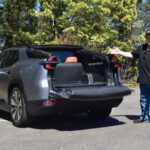
- Deepal E07 review: good, different – and unapologetically cleverThere are plenty of electric SUVs around right now. The Deepal E07 isn’t really one of them. It looks like an SUV, borrows ideas from a ute, behaves like a panel van when you need it to, and still delivers a premium EV experience. As I said on the drive, it’s good, it’s different –
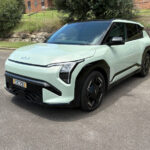
- Kia EV3 GT-Line review: the novated lease splurge that actually makes senseThere are fleet cars you buy with your head, and novated lease cars you buy with your heart. The Kia EV3 GT-Line sits very comfortably in the second camp. At close to $70,000 drive-away, this isn’t the EV3 for fleet policy spreadsheets. It’s the one you choose when you want a compact SUV with a premium feel
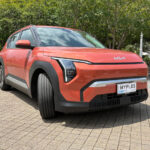
- Kia EV3 Air review: a compact EV that makes sense for fleetsThe Kia EV3 Air might sit at the smaller end of the SUV spectrum, but it’s a good example of how “small” has grown in 2026. In this base model, the EV3 Air presents as a genuinely practical option for fleets, and organisations looking to reduce emissions without compromising usability. It’s well suited to a