
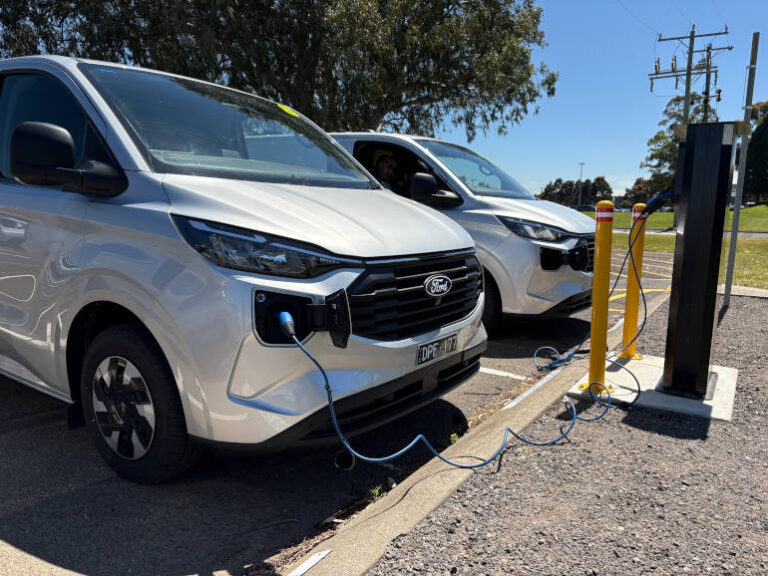
Fleet Managers in New South Wales now have another opportunity to reduce emissions and operating costs, with the NSW Government opening its latest round of EV Fleet Kick-Start funding.
Aimed squarely at businesses and organisations that are new to electric vehicles — or looking to pilot EVs before scaling — the program provides co-funding for both battery electric vehicles (BEVs) and smart charging infrastructure, helping fleets overcome one of the biggest barriers to electrification: upfront cost.
For companies operating passenger, light commercial or heavy vehicle fleets, the guidelines make it clear this is a practical, fleet-first program, not a theoretical policy exercise.
What is Kick-Start funding?
Kick-Start funding is part of the broader NSW Electric Vehicle Fleets Incentive, designed to support early-stage fleet electrification.
Under the program, eligible organisations can receive funding for:
- Up to 15 new battery electric vehicles (across all funding rounds combined), and
- Up to 15 smart charging ports to support those vehicles.
The funding is first-come, first-served, with allocations released annually and remaining open until funds are exhausted.
Who is eligible?
The program is open to a wide range of fleet operators, provided they hold a valid ABN. Eligible applicants include:
- Private businesses
- Not-for-profit organisations
- Local councils
- State-owned corporations
- Federal government agencies operating in NSW
- Car rental, rideshare, taxi and subscription companies
- Truck operators, including single-truck businesses
To qualify, organisations must already be operating:
- At least three fleet vehicles in NSW, or
- At least one registered taxi or truck, and those vehicles must have been in service for at least six months.
Importantly for national fleets, organisations can be headquartered outside NSW — as long as the incentivised vehicles are registered and used predominantly in NSW.
Which vehicles are covered?
Only brand-new battery electric vehicles are eligible. Hybrids, plug-in hybrids, fuel-cell vehicles and converted vehicles are excluded.
Eligible categories include:
- Passenger vehicles and SUVs
- Light commercial vehicles up to 3.5 tonnes GVM
- Heavy commercial vehicles from 3.5 tonnes up to 23 tonnes GVM
For the 2025–26 funding year, incentives range from:
- $5,000 for passenger vehicles and SUVs
- Up to $8,000 for light commercial vehicles
- $10,000 to $50,000 for heavy vehicles, depending on GVM
Passenger vehicles and SUVs must meet minimum and maximum price thresholds, while no price caps apply to light or heavy commercial EVs.
Charging infrastructure support
Kick-Start funding also supports the installation of smart charging infrastructure, which can often be as challenging as sourcing the vehicles themselves.
Fleets can claim:
- Up to 50 per cent of eligible charging costs per port,
- Support for AC or DC chargers,
- Installation, electrical upgrades and associated works, and
- Charge-as-a-Service (CaaS) solutions.
Each incentivised vehicle can be linked to one charging port, and incentives vary based on charger type and vehicle category. All chargers must meet approved technical standards and be installed within NSW.
How the process works
The application process is deliberately structured and predictable:
- Apply online via the NSW grants platform
- Eligibility assessed (typically within 20 business days)
- Funding deed issued and signed
- Vehicles purchased or leased and chargers installed
- Evidence submitted within 100 business days
- Incentive payment made following invoice approval
While vehicles do not need to be delivered before applying, orders must not be placed before the funding round opens, and fleets should be confident they can meet the delivery and evidence timelines.
Why this matters for Fleet Managers
For the NSW Government, Kick-Start funding is not about wholesale fleet replacement — it’s about:
- Testing EVs in real operating conditions
- Understanding duty cycles, charging and driver acceptance
- Building internal confidence and data for future decisions
With heavy vehicles now included, the program also creates opportunities for councils, utilities, construction, waste and service fleets to trial electric trucks in suitable applications.
As fleet electrification accelerates, this NSW program provides a measured, low-risk entry point — one that recognises the operational realities Fleet Managers deal with every day.
- Whole-of-Life Winner? Triton Makes Its Move
 Three of Australia’s top four best-selling vehicles are 4×4 utes — Ford Ranger, Toyota HiLux and Isuzu D-Max. So where does the Mitsubishi Triton sit in that pecking order for fleet buyers in 2025? The real question isn’t styling or badge appeal. It’s whole-of-life cost, suitability and return on investment. And that’s where Triton makes its case. Whole-of-Life Costs:
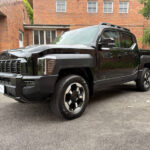
 - Kia Tasman X-Line Review: Different by Design, but Is It Right for Fleet or Novated Buyers?The Kia Tasman has arrived in Australia with plenty of noise, plenty of opinion, and no shortage of scrutiny. In a dual-cab ute market dominated by household names like HiLux and Ranger, simply turning up isn’t enough. Kia knows that — and the Tasman X-Line is its statement that it’s prepared to do things differently.
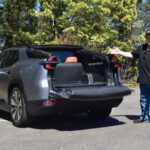
- Deepal E07 review: good, different – and unapologetically cleverThere are plenty of electric SUVs around right now. The Deepal E07 isn’t really one of them. It looks like an SUV, borrows ideas from a ute, behaves like a panel van when you need it to, and still delivers a premium EV experience. As I said on the drive, it’s good, it’s different –
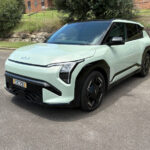
- Kia EV3 GT-Line review: the novated lease splurge that actually makes senseThere are fleet cars you buy with your head, and novated lease cars you buy with your heart. The Kia EV3 GT-Line sits very comfortably in the second camp. At close to $70,000 drive-away, this isn’t the EV3 for fleet policy spreadsheets. It’s the one you choose when you want a compact SUV with a premium feel
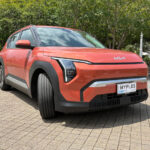
- Kia EV3 Air review: a compact EV that makes sense for fleetsThe Kia EV3 Air might sit at the smaller end of the SUV spectrum, but it’s a good example of how “small” has grown in 2026. In this base model, the EV3 Air presents as a genuinely practical option for fleets, and organisations looking to reduce emissions without compromising usability. It’s well suited to a