

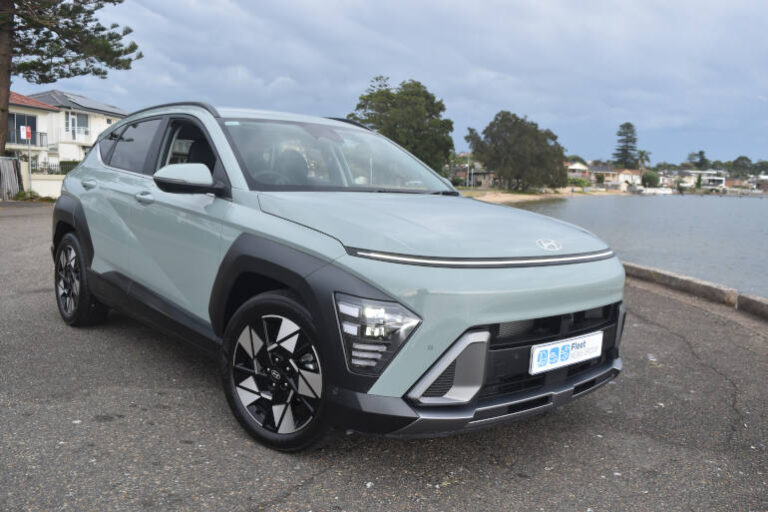
For HR Managers considering salary packaging options for their employees, or Finance Managers planning for emissions reduction within a cost-effective framework, novated leasing offers significant financial advantages—especially when applied to electric vehicles (EVs) under the Fringe Benefits Tax (FBT) Exemption.
Using novated lease estimates provided by Paywise for three variants of the 2025 Hyundai Kona—Petrol, Hybrid, and Electric—we break down the real-world impact on employee take-home pay, tax savings, and GST benefits.
Novated Lease Snapshot (Hyundai Kona Premium Variants)
| Variant | FBT Exempt | Take-Home Pay Reduction (weekly) | Income Tax Savings (48 months) | GST Savings |
|---|---|---|---|---|
| Electric | ✅ Yes | $253 | $24,759 | $6,182 |
| Hybrid | ❌ No | $250 | $8,102 | $3,955 |
| Petrol | ❌ No | $251 | $9,724 | $3,591 |
Why Novated Leasing Makes Sense
Novated leasing allows employees to finance a vehicle using pre-tax income, reducing taxable income and providing potential GST savings. It also simplifies budgeting by including running costs such as servicing, registration, insurance, and fuel (or electricity) in one regular payment.
But the real game changer is the FBT Exemption for EVs, which completely removes the requirement for post-tax deductions on eligible zero-emission vehicles, leading to significant savings.
Comparing the Hyundai Kona Variants
Kona Premium Electric
- Reduction in take-home pay: $253/week
- Income tax savings: $24,759 over the lease term
- GST savings: $6,182
- Running costs: No fuel cost, $12.12/week for charging
- Post-tax deduction: $0 — thanks to FBT Exemption
The EV version of the Kona delivers the biggest bang for buck under novated leasing due to the FBT exemption. Even with a higher vehicle cost and lease payment ($288.97/week), the entire cost is deducted pre-tax, resulting in significantly lower income tax and no post-tax component.
The effective salary sacrifice gives employees a high-spec electric SUV with lower running costs and the biggest overall tax benefit.
Kona Premium Hybrid
- Reduction in take-home pay: $250/week
- Income tax savings: $8,102
- GST savings: $3,955
- Running costs: Fuel allowance of $22.50/week
- Post-tax deduction: $167/week
The Hybrid option offers a more efficient petrol drive and modest savings over the Petrol variant, but lacks the full benefit of the EV’s tax treatment. The FBT still applies, which means employees must pay a portion of the lease from their post-tax income.
Kona Premium Petrol
- Reduction in take-home pay: $251/week
- Income tax savings: $9,724
- GST savings: $3,591
- Running costs: Fuel allowance of $49.62/week
- Post-tax deduction: $152/week
Although the lowest purchase price makes it seem more affordable upfront, the running costs and FBT burden make the petrol version less attractive over the life of the lease when compared to the EV or hybrid.
Total Benefit of EVs Under Novated Leasing
With the FBT exemption for electric vehicles in place until at least 1 April 2027, the Hyundai Kona Electric offers:
- The lowest net impact on employee take-home pay relative to its price
- The highest income tax saving across all variants
- The full GST credit on the vehicle purchase (not claimable personally under normal purchase)
- Zero post-tax deduction, simplifying payroll and maximising salary packaging
Summary for HR and Finance Managers
For employers offering novated leasing as part of a broader employee benefit program—or using it as a strategy to lower emissions—the Hyundai Kona Electric Premium clearly offers the strongest financial advantage due to the FBT exemption. While the upfront price is higher, the overall tax savings and lower operating costs result in a lower real-world financial impact compared to petrol or hybrid variants.
By packaging an EV under a novated lease:
- Employees save more on tax
- Employers support net zero fleet goals
- GST is claimable on vehicle purchase
- No FBT liability makes payroll simpler.