
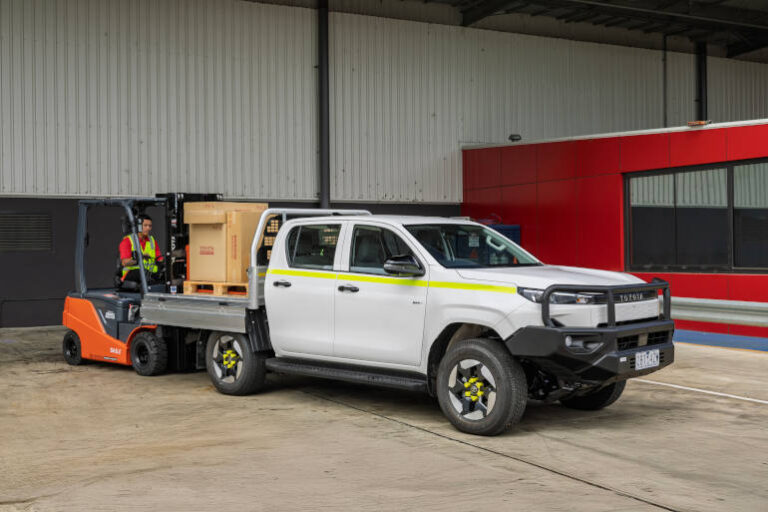
Toyota’s electric HiLux SR costs around $17,000 more upfront than the diesel SR in our comparison. So what happens when you run the numbers over the life of the vehicle? The gap gets a lot smaller.
In this Fleet News Group video review, I put the HiLux BEV through the same Best Value Analysis used for the Fleet News Group Awards to see where it makes sense as a work ute.
I compare the diesel SR with the electric SR and SR5 and show how a change in diesel prices can shift the result. Marc also shares what he saw on the road and after a morning of four-wheel driving, when the dash was showing 30kWh/100km. That’s a figure worth thinking about if your utes spend their days on unsealed roads, carrying gear or towing.
There’s a look underneath at how Toyota fits the battery between the chassis rails and uses a different rear suspension to retain four-wheel-drive capability. With up to 2,000kg of braked towing and up to 855kg of payload, the electric HiLux gives fleet managers two figures to check against what their crews actually tow and carry.
Inside, the cab is a workplace. There’s room for tradie-sized drink bottles and a power outlet for charging tools, although you’ll want to see where Toyota put the socket. The review also covers a decision fleet managers need to make before handing over the keys. Will drivers charge at the depot, at home or on the road?
Watch the full review to see the cost comparison, take a look around the ute and decide which jobs in your fleet could go electric. If one of your diesel HiLux utes is due for replacement, would you put the BEV on your shortlist?