

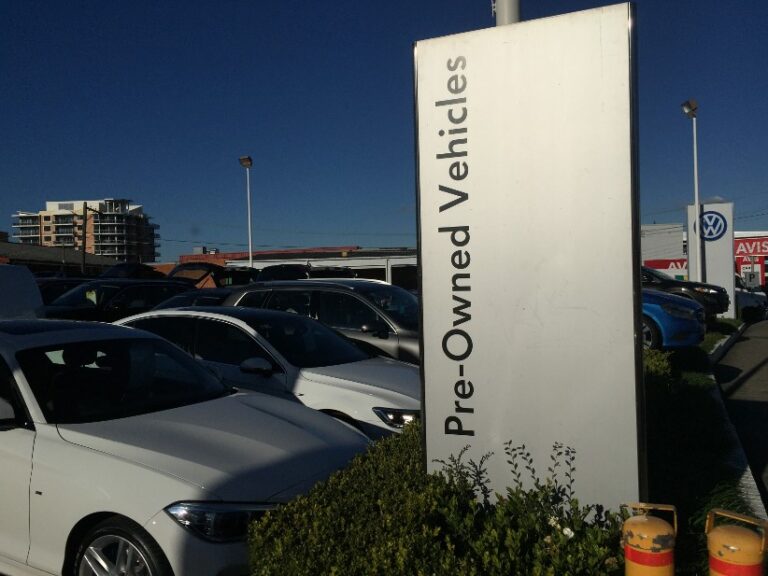
The used car market has been returning to its long-term averages in 2026, and for fleet managers who resisted the temptation to inflate residual values during the COVID-era boom, the correction should come as no surprise.
There has been plenty of noise surrounding used vehicle prices this year. Battery electric vehicle (BEV) resale values have attracted attention, internal combustion engine (ICE) vehicles are facing different market pressures, and fuel prices are influencing buyer behaviour.
Meanwhile, new automotive brands are entering Australia with vehicles priced at levels traditionally associated with the used car market.
It’s creating disruption, but there’s a bigger story that fleet managers shouldn’t overlook.
Used vehicle prices have always moved through cycles. And after the extraordinary conditions experienced between 2021 and 2023, the market is returning to something much more familiar.
For experienced fleet managers, this shouldn’t be a surprise.

The COVID boom was never going to last
Used vehicle prices increased dramatically during the pandemic as supply constraints, long delivery times and strong demand pushed buyers towards second-hand vehicles.
At the market’s peak in 2022, used vehicle prices were approximately 40% above pre-COVID levels.
For organisations selling fleet vehicles during this period, the returns were extraordinary. Vehicles that would normally have followed a predictable depreciation curve were achieving prices well above their expected residual values.
The temptation was obvious.
If a vehicle purchased in 2021 was worth significantly more in 2022, why not increase its forecast residual value and reduce the projected whole-of-life cost?
The answer is that a temporary market boom doesn’t change the long-term depreciation characteristics of an asset.
Fleet vehicles are typically held for four, five or six years. A vehicle purchased during the boom wasn’t necessarily going to be sold until 2026 or 2027.
And that’s exactly where we are today.
Residual values should follow the long-term trend
At Fleet News Group, our advice throughout the period of inflated used vehicle prices was consistent: stick with the long-term averages when setting residual values.
Used vehicles have always found buyers at different price points.
There is a market for a $5,000 vehicle, a $10,000 vehicle, a $15,000 vehicle and a $20,000 vehicle. The age, kilometres, condition and desirability of the vehicle determine where it sits in that market.
These price points don’t disappear simply because new technology arrives or market conditions change.
What changes is the type of vehicle buyers can purchase for their money.
When a new vehicle enters the market at a price traditionally associated with a two- or three-year-old used car, it creates competition. Buyers must decide whether to purchase the used vehicle or spend a little more for something new.
This is particularly relevant as new manufacturers introduce more affordable vehicles into Australia, including electric models.
The arrival of alternative powertrains adds another dimension to the equation. Buyers must consider fuel costs, charging access, technology, range and future resale demand.
However, the fundamental relationship remains: used vehicle values are influenced by the price of comparable new vehicles, buyer affordability and demand.
They aren’t immune to depreciation.
Leasing companies understood the cycle
One of the most interesting aspects of the used vehicle boom has been the financial performance of fleet management and leasing companies.
During the period of elevated used car prices, several publicly listed fleet management businesses reported extraordinary profits from the disposal of vehicles.
These profits weren’t necessarily the result of a sudden improvement in fleet management efficiency. They were largely the result of vehicles being sold for significantly more than their forecast residual values.
The leasing industry generally maintained conservative residual value assumptions rather than adjusting them to reflect the temporary market peak.
That decision proved extremely profitable.
Lease rentals continued to reflect the depreciation expected under more traditional market conditions, while the vehicles themselves were being sold at inflated prices.
For customers with profit-sharing arrangements, the boom delivered a significant financial benefit. They received a share of the additional proceeds when vehicles were sold. For customers without these arrangements, the leasing company retained the upside.
It’s an important distinction when considering the financial benefits of outsourced fleet management and leasing arrangements.
And it demonstrates why leasing companies take a long-term view of residual values. Their business models need to operate through multiple economic cycles, not just the conditions prevailing when a vehicle is purchased.
New vehicle pricing is changing the equation
The Australian market is now experiencing another structural shift.
New brands are entering with competitively priced vehicles, while established manufacturers are responding with new models, technology and pricing strategies.
In some cases, the price of a new vehicle is approaching what buyers previously expected to pay for a used vehicle.
This puts pressure on existing used vehicle values.
At the same time, changing fuel prices are influencing demand for petrol, diesel, hybrid and electric vehicles.
BEV prices can respond to these changes differently from ICE vehicles, particularly as new electric models arrive with improved technology and more competitive pricing.
But the broader lesson remains unchanged.
Residual values aren’t determined by a single factor, and the excitement surrounding an emerging technology shouldn’t be confused with a permanent change in depreciation.
The lesson for fleet managers in 2026
For fleet managers who purchased vehicles during 2021 and 2022, the next 12 to 24 months will be an important test of their residual value assumptions.
Those who based their forecasts on the extraordinary resale prices being achieved during the pandemic may find disposal proceeds falling short of expectations.
That shortfall will ultimately increase the actual whole-of-life cost of those vehicles.
However, fleet managers who maintained conservative residual values based on historical depreciation trends should be in a much stronger position.
They may not achieve the exceptional disposal profits seen during the boom, but that was never the objective.
The purpose of residual value forecasting is to accurately estimate the cost of owning and operating a vehicle over its expected service life.
It’s not to speculate on future market prices.
The market correction in 2026 reinforces a principle that experienced fleet managers have understood for decades: good fleet management is built on long-term asset management principles, not short-term market conditions.
The exceptional resale returns achieved during the COVID period were exactly that — exceptional.
And as vehicles purchased during those years reach the end of their fleet life, the market is delivering a reminder that depreciation hasn’t disappeared.
It was simply interrupted.
Editorial note: Recent market data supports the overall argument. The AADA reported falling retained values for some used and demonstrator vehicles in October 2026, while FleetPartners reported weakening ICE resale prices. The extent of the correction varies by vehicle category. AADA+1