
Fleet replacement planning doesn’t happen at launch events or dealership walk-arounds. It happens quietly, inside spreadsheets, Asset Management Plans and long-term replacement models that stretch out 10 years or more — and get reviewed every single year.
With the Ford Ranger Super Duty now locked in for Australia, fleet buyers finally have enough clarity to start factoring it into 2026 procurement decisions and adjusting those longer-term replacement assumptions.
This article breaks down the model line-up, key specifications and pricing structure of the Ranger Super Duty, and — more importantly — what it means for fleet strategy, utilisation reviews and whole-of-life planning.
Why the Ranger Super Duty Changes Fleet Planning Conversations
Before getting into the model detail, it’s worth stepping back. The Ranger Super Duty isn’t just another variant in the Ranger range. It sits in a space that previously forced fleets into compromises:
- aftermarket GVM upgrades
- stepping up into light trucks
- or retaining ageing assets beyond their ideal replacement point
From a fleet strategy perspective, it creates a new option in the light commercial category — one that can legitimately replace:
- some LandCruiser 70 Series applications
- some entry-level cab-over trucks
- and a wide range of aftermarket-modified dual cabs
That has direct implications for 10-year Asset Management Plans, especially where:
- utilisation has crept up
- payload risk is increasing
- or compliance exposure is being actively reviewed
Ranger Super Duty Model Line-Up (Australia)
Ford has structured the Ranger Super Duty range deliberately around fleet use cases, not lifestyle segmentation.
1. Ranger Super Duty Pick-Up
- Dual-cab pick-up body
- Factory-engineered heavy-duty platform
- Designed for fleets that still require a tub, but need higher durability and load capability than a standard Ranger
This model is likely to appeal to:
- utilities
- field service fleets
- emergency services
- rural and regional operators
2. Ranger Super Duty XLT
- Higher equipment level
- Focus on safety, driver assistance and operational confidence
- Positioned for fleets prioritising risk reduction, not just entry price
Despite traditional assumptions, Ford has been clear that fleet customers actively asked for this level of specification to reduce incidents and downtime.
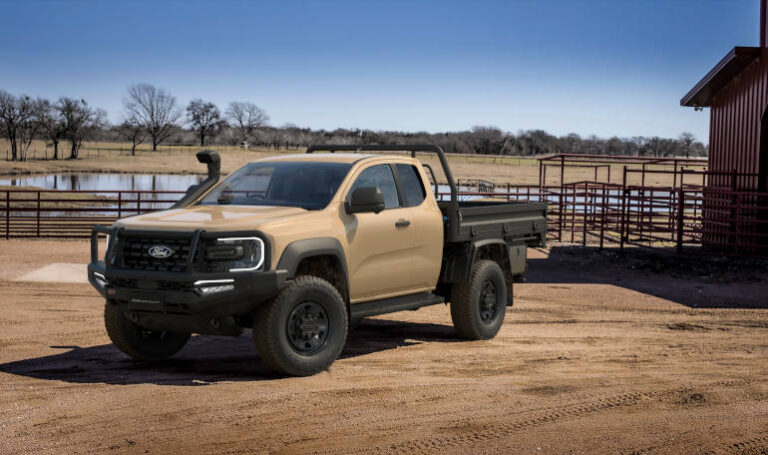
3. Ranger Super Duty Cab-Chassis (Single, Super and Double Cab)
- The backbone of the fleet range
- Designed for trays, service bodies, canopies and specialist conversions
- Fully integrated factory engineering rather than aftermarket compromise
For most government, utility and trade fleets, cab-chassis variants will be the volume sellers and the key drivers of long-term replacement planning.
Key Specifications That Matter to Fleet Buyers
Rather than listing every spec line, we’ve focused on the elements that actually influence fleet strategy, compliance and replacement cycles.
Gross Vehicle Mass (GVM) and Payload
- 4.5-tonne GVM across the Super Duty platform
- Payload engineered into the vehicle from the factory
- Eliminates the need for many aftermarket GVM upgrades
For fleets managing WHS obligations, this is a major shift. Payload is no longer a workaround — it’s a design principle.
Chassis and Underbody Engineering
- Heavily re-engineered frame
- Upgraded axles, hubs and suspension components
- Designed for sustained operation at high load, not occasional use
This directly supports longer replacement cycles in Asset Management Plans by reducing structural fatigue risk.
Safety and Driver Assistance
Fleet buyers often focus on safety from a risk and uptime perspective rather than ANCAP stars alone.
Key inclusions across the Super Duty range include:
- integrated cameras and sensors
- trailer assist systems
- driver assistance technology designed to reduce low-speed incidents
These features reduce:
- vehicle downtime
- insurance claims
- driver training burden
Which makes them highly relevant when modelling whole-of-life costs.
Fuel Capacity and Operating Range
- 130-litre fuel tank
- Designed to reduce refuelling frequency and unproductive time returning to base
For remote, regional and infrastructure fleets, this directly improves utilisation efficiency.
Conversion and Body Compatibility
- Engineered with Ford Pro Converter pathways in mind
- Supports trays, service bodies and specialist upfits
- Reduces lead times and complexity compared to multi-supplier aftermarket builds
This is particularly important when mapping delivery timelines into annual capital programs.
Pricing Positioning: What Fleets Need to Understand
Ford has positioned Ranger Super Duty above standard Ranger variants, but deliberately below light truck alternatives when assessed on a whole-of-life basis.
Rather than viewing pricing in isolation, fleet buyers should consider:
- avoided aftermarket upgrade costs
- simplified warranty and compliance
- reduced downtime
- longer usable service life
For many fleets, the Super Duty will reduce total cost of ownership, even if the upfront price is higher than a conventional dual cab.
Implications for 10-Year Replacement Plans
This is where the Ranger Super Duty becomes strategically important. Fleet teams reviewing Asset Management Plans should consider:
- whether Super Duty can replace vehicles currently being extended beyond optimal life
- whether it can substitute for light trucks in certain applications
- whether it reduces risk exposure in high-payload operations
In practice, that may mean:
- adjusting replacement cycles
- consolidating vehicle types
- simplifying training and compliance frameworks
And importantly, future-proofing fleets against rising safety and compliance expectations.
What Fleet Buyers Should Do Next
For fleets planning procurement in 2026 and beyond, the Ranger Super Duty should now be:
- Included in replacement modelling
- Assessed against current high-risk payload vehicles
- Trialled in operationally demanding roles
- Evaluated on whole-of-life cost, not purchase price
The Ranger Super Duty isn’t just a new model — it’s a new planning variable. And for Fleet Managers updating their Asset Management Plans this year, it’s one worth taking seriously.
Ford Ranger Super Duty – Pricing Summary by Model (Australia)
| Model | Body Style | Availability | RRP (AUD, excl. on-roads) |
|---|---|---|---|
| Ranger Super Duty Single Cab-Chassis | Cab-chassis | Launch | $82,990 |
| Ranger Super Duty Super Cab-Chassis | Cab-chassis | Launch | $86,490 |
| Ranger Super Duty Double Cab-Chassis | Cab-chassis | Launch | $89,990 |
| Ranger Super Duty Double Cab Pick-Up | Dual-cab pick-up | Mid-2026 | $93,990 |
| Ranger Super Duty XLT Double Cab-Chassis | Cab-chassis | Mid-2026 | $95,990 |
| Ranger Super Duty XLT Double Cab Pick-Up | Dual-cab pick-up | Mid-2026 | $99,990 |
- EVs are changing the Fleet Manager’s job
 Buying vehicles has always been part of fleet management. Electrification is making everything around the purchase increasingly important. Data analysis, employee engagement, charging infrastructure, change management, executive support and long-term planning were recurring themes when four Fleet News Group Awards finalists joined a panel discussion at Everything Electric Sydney. Representatives from Allianz, Ausgrid, Blacktown City
 - What Ford Pro Means for FleetsFord Pro has officially launched in Australia, bringing a broader commercial vehicle support model that aims to combine vehicles, finance, conversions, servicing and software into a more integrated offering for fleet customers. For Fleet Managers, however, the important question is not simply what Ford Pro promises globally, but which parts of that ecosystem are available
- WEX and Mastercard target fleet payment fragmentationWEX and Mastercard have announced a strategic partnership to bring fuel, vehicle maintenance, tolling and parking payments into a single payment experience for fleets across Asia-Pacific. The partnership aims to reduce the administrative work created when fleet expenses sit across separate payment systems, while giving Fleet Managers a more complete view of operating costs. For
- Toyota flags price pressure on diesels from 2027Toyota has warned that tighter emissions targets from 2027 could place upward pressure on commercial vehicle prices as it balances continued demand for diesel models with its obligations under the New Vehicle Efficiency Standard (NVES). The manufacturer has not announced any price increases or provided details on affected models, amounts or implementation dates. However, its
- Why Origin is backing the fleets leading Australia’s transitionOrigin Energy has backed the Fleet News Group Awards program as a Foundation Sponsor because it understands first-hand how much work sits behind a successful fleet transition. For Chau Le, General Manager, E-mobility at Origin Energy and Chair of the Electric Vehicle Council, recognising fleet excellence is important because the organisations leading the transition are