

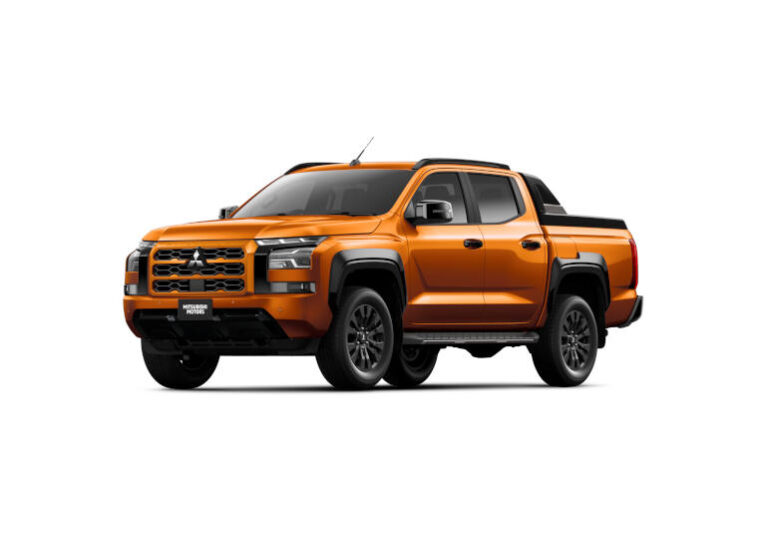
Mitsubishi has announced a series of upgrades for the 2026 model year Triton, focusing on ride comfort, chassis refinement and new in-vehicle technology—while maintaining the broad range of cab and drivetrain options that have made the ute a consistent performer in fleet and trade applications.
The updated range will go on sale in Australia from May 2026, with pricing starting from $37,090 for the GLX 4×2 Single Cab Chassis and extending to $65,590 for the flagship GSR Double Cab Pick-Up.
For fleet buyers, the headline changes are less about powertrain and more about refinement and usability—areas that directly influence driver acceptance, fatigue management and whole-of-life outcomes.

Suspension changes aim to improve comfort without sacrificing durability
One of the most significant updates for the 2026 Triton is a revised suspension setup applied across the entire range.
Mitsubishi has introduced a lower front spring rate, new shock absorber valving and larger rear dampers designed to improve ride comfort and reduce harshness—particularly important for vehicles operating across mixed urban and regional environments.
The brand has retained the heavy-duty four-leaf rear suspension for GLX and GLX+ models, while higher grades such as GLX-R, GLS and GSR continue with a three-leaf setup tuned for comfort and everyday usability.
Bruce Hampel, General Manager of Product Strategy at Mitsubishi Motors Australia, said the updates were designed to build on the Triton’s reputation for reliability while improving refinement.
“These updates further strengthen these values, with refined specifications including new suspension componentry that is applied across the range, making this Triton more refined than ever, while still retaining impressive strength and durability,” Hampel said.
From a fleet perspective, this is a practical change. Ride quality directly affects driver satisfaction and fatigue levels—two factors that increasingly show up in safety reporting and staff retention discussions.
New YAMAHA Performance Damper introduced on flagship GSR
The top-spec GSR variant gains a new feature rarely seen in mainstream utes—the YAMAHA Performance Damper.
Two dampers are mounted horizontally across the chassis to improve body control, steering response and straight-line stability, while also reducing vibration and noise inside the cabin.
The goal is a smoother and less fatiguing driving experience, particularly on long journeys or rough roads—conditions common for regional fleets, utilities and field service teams.
It’s a subtle engineering addition, but one that reflects the ongoing shift in the ute market from purely work-focused vehicles to dual-purpose fleet and lifestyle platforms.
Connected vehicle technology arrives on Triton for the first time
Another notable change for 2026 is the introduction of MITSUBISHI CONNECT on the GSR variant.
The system includes an embedded telematics unit operating on the Telstra network, along with remote access features through a smartphone app.
Key functions include:
- SOS emergency assistance
- Automatic collision notification
- Stolen vehicle tracking
- Geo-fencing and speed alerts
- Remote vehicle functions such as door locking and vehicle location
These services operate 24 hours a day and are designed to improve safety, security and convenience for drivers and fleet operators.
For organisations already using telematics platforms, this kind of factory-installed connectivity is becoming increasingly relevant. It supports better visibility of vehicle usage, improves incident response and can simplify compliance reporting.
Broad model range continues to support diverse fleet applications
The 2026 Triton range remains one of the most diverse in the segment, covering:
- Single, Club and Double Cab configurations
- Cab Chassis and Pick-Up body styles
- 4×2 and 4×4 drivetrains
- Manual and automatic transmissions
All variants continue to use the same 2.4-litre bi-turbo diesel engine, producing:
- 150kW of power
- 470Nm of torque
- Fuel consumption from 7.5 to 7.7L/100km depending on configuration
That consistency across the range simplifies procurement, servicing and driver training—an often overlooked benefit for larger fleets managing multiple vehicle types.
Safety and usability remain core strengths
The Triton continues to offer a comprehensive suite of active safety technologies across the range, including:
- Forward Collision Mitigation with pedestrian and cyclist detection
- Adaptive Cruise Control (automatic models)
- Blind Spot Warning and Lane Change Assist
- Driver Monitoring System
- Rear Autonomous Emergency Braking
These features are increasingly expected by fleet buyers, particularly as organisations align vehicle procurement with broader workplace safety obligations.
Interior usability has also been refined, with the GLS gaining new dash-mounted cup holders and improved trim finishes—small changes that reflect how modern utes are used as mobile offices as much as transport tools.
Pricing positions Triton as a strong value play in the ute segment
Pricing for the 2026 Triton range spans a wide bracket, supporting both entry-level work vehicles and higher-spec fleet or novated lease options.
2026 Mitsubishi Triton pricing (RRP):
- GLX 4×2 Single Cab Chassis – from $37,090
- GLX+ 4×4 Dual Cab Pick-Up – from $53,990
- GLS 4×4 Dual Cab Pick-Up – from $60,140
- GSR 4×4 Dual Cab Pick-Up – from $65,590
The range is also supported by Mitsubishi’s 10/10/10 Diamond Advantage program, which includes a 10-year warranty, capped-price servicing and roadside assistance when servicing conditions are met.
For Fleet Managers, that kind of long-term support remains a key factor in residual value confidence and lifecycle planning.
The fleet takeaway
The 2026 Triton update isn’t about dramatic change—it’s about incremental improvement.
Better ride comfort, improved chassis refinement and the introduction of connected technology all point to a vehicle that is evolving with the expectations of modern fleets.
And in a market where driver acceptance, safety performance and operating costs carry equal weight, those small refinements can make a meaningful difference over the life of the vehicle.