
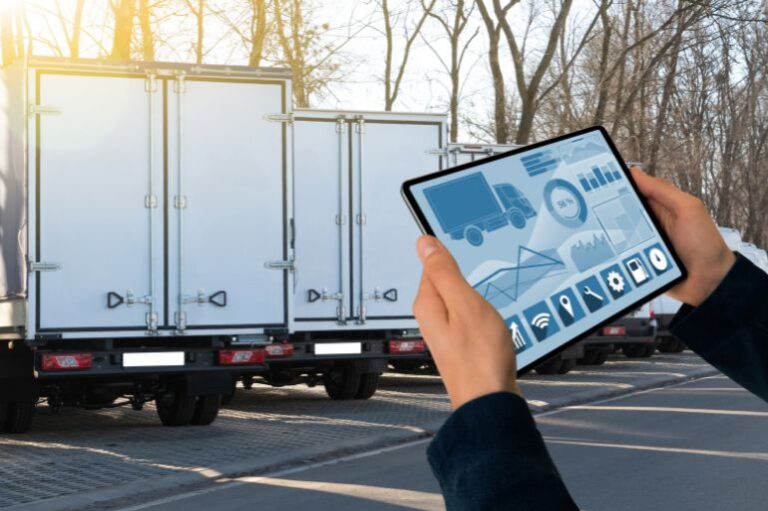
Fleet Managers have moved from drowning in telematics data to actively harnessing it for better decisions — and the next evolution is already underway: artificial intelligence. That was the focus of the Mobility Live 2025 panel “Optimising Fleet Performance with Advanced Vehicle Technology and Telematics,” moderated by Marc Sibbald, Director – Fleet at IPWEA.
From Data Fatigue to Decision Intelligence
Daniel Peterson of Dubbo Regional Council acknowledged the challenge but said tools like exception reporting are helping.
“We’re still drowning in data, but it’s better managed,” he said. “Exception reports are emailed directly to me so I don’t have to sift through everything. And I’m really excited about how AI can help pick up trends and issues we might not see straight away.”
Peterson even uses AI tools to analyse internal workshop data.
“I upload job card data and ask, ‘How much did we spend on grader repairs last month?’ or ‘How many at-fault accidents did we have?’ It gives me the answers instantly with a graph. It’s unreal.”
Turning Insights into Action
Darren Scott said his team at Ipswich City Council is experimenting with different analytics partners to connect telematics, fuel, and tyre data.
“We’re pulling it all together to give us informed decisions about what’s happening in our fleets,” he said. “It’s helping us understand utilisation, downtime, and maintenance costs in a much more complete way.”
Michael O’Shannessy added that data insights have led to structural changes in the workforce.
“We noticed that rollers weren’t being used efficiently on some jobs,” he said. “So we created a new multi-skill operator role — staff can jump between trucks and rollers, earning a higher grade but doing two jobs. That change came directly from data analysis.”
Real-Dollar Returns and ROI
Panelists agreed that data-driven fleet management is delivering measurable financial benefits.
Peterson cited a recent fleet rationalisation:
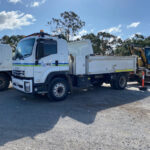
“We were able to show that several vehicles were sitting in the depot 80% of the time,” he said. “That allowed us to rationalise seven light vehicles, one crew truck, and a backhoe — easily saving the cost of a fleet manager’s salary.”
O’Shannessy said telematics has cut engine idle time by almost a third.
“Idle hours dropped from 750 a week to just over 500,” he said. “At four litres per hour, that’s saving us about $1,600 a week — it pays for the system itself.”
Darren Scott highlighted “proactive value creation” through data-led decisions:
“By analysing GPS mowing data, we realised larger cutting decks would deliver faster coverage. We upgraded to 96-inch mowers and saw big efficiency gains,” he said.
Bruce Scoble said Endeavour Energy’s focus has been on optimising fleet size to reduce operating costs.
“The more we can reduce the fleet, the lower the cost of electricity for our customers,” he explained. “It’s about aligning fleet optimisation with community outcomes.”
AI and the Next Frontier of Fleet Safety
Henry Morgan from Brigade Electronics explained how AI is already reshaping fleet safety systems.
“AI allows cameras to recognise human form and adjust detection zones based on speed,” he said. “It eliminates false alerts and provides live warnings if someone comes too close to a machine — and we can now do that in about 150 milliseconds.”
Bruce Scoble added that Endeavour Energy is using AI for both safety and decarbonisation.
“We can now recreate incidents using data, showing exactly what happened and why,” he said. “And looking forward, AI will help us analyse vehicle composition and optimise the fleet as we transition to low-emission vehicles.”
Michael O’Shannessy predicted that AI would revolutionise scheduling.
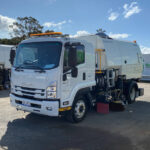
“I’m excited to see how AI can automatically plan efficient routes for our street sweepers and graders,” he said. “That’s where real savings and community benefits will come.”
Fleet Managers Embrace a Strategic Future
In closing, Sibbald reminded the audience that technology is now central to every Fleet Manager’s role.
“Technology is no longer a nice-to-have — it’s mandatory,” he said. “The challenge now is to rise above the day-to-day and use it strategically.”
From geo-fencing to AI-driven analytics, fleet management has entered an era where data isn’t just collected — it’s converted into decisions, savings, and safer roads.
- Before buying another street sweeper, check what the ones you own are doing
 When an operational team says it needs another vehicle, the obvious fleet question is: why? For specialised plant such as street sweepers, answering that question can be difficult. The existing vehicles may be recording significant operating hours. Overtime may be increasing. Maintenance costs may be rising. And despite all that activity, the organisation may still
 - AI is accelerating fleet analysis — but the fleet manager still mattersArtificial intelligence is beginning to change how quickly fleet managers can move from data to decisions, but Summit Fleet Leasing and Management Managing Director Darren Gore believes the technology still needs an experienced fleet professional behind it. Speaking on the Fleet News Group podcast, Gore discussed Summit’s development of AI Fleet Insights and how the
- Why fleet replacement plans need more than age and kilometresFleet replacement planning is often treated as a timetable. An asset reaches a nominated age, records a certain number of kilometres or hours, and enters the replacement program. It is a familiar approach, but Andrew Railz believes it is no longer enough for organisations managing limited budgets, long delivery times and growing expectations around service
- Do you know what accidents are really costing your fleet?For fleet managers, knowing how much the organisation spends on vehicle repairs should be straightforward. But according to DingGo Co-Founder and Chief DingGo, Shaun Janks, the true cost of accidents can be much harder to identify than many fleets realise. DingGo operates in the accident management space, using a digital platform to connect the different
- Fleet Maintenance Finally Goes DigitalFleet maintenance has spent decades relying on telephones, emails and manual approval processes, even as almost every other area of business has moved online. FleetGuru.ai CEO and Co-Founder Eden Shirley believes that is finally changing. FleetGuru.ai has built a platform designed to connect workshops, service providers, fleet management companies and fleet managers in one digital