
For years, Toyota has been accused of dragging its feet on electrification. While competitors flooded the market with battery-electric vehicles (BEVs), Toyota doubled down on hybrids, preached patience, and kept repeating a now-famous line: “BEVs aren’t the only solution.”
But if you listened carefully to Sean Hanley, Toyota Australia’s Vice President of Sales, Marketing and Franchise Operations, at the exclusive Fleet News Group media preview for the new HiLux, you’d realise Toyota hasn’t been resisting the EV revolution — it’s been preparing for it on its own terms.
“Our strategy from day one has been a multi-pathway strategy,” Hanley said. “We were one of the few manufacturers that got up and said BEVs are not going to be the only solution, and we will not be going down the BEV-only route. We’ll go down a multi-pathway strategy — hybrid, plug-in hybrid, fuel-cell electric, and battery electric, and now biofuels. It’s a good strategy.”
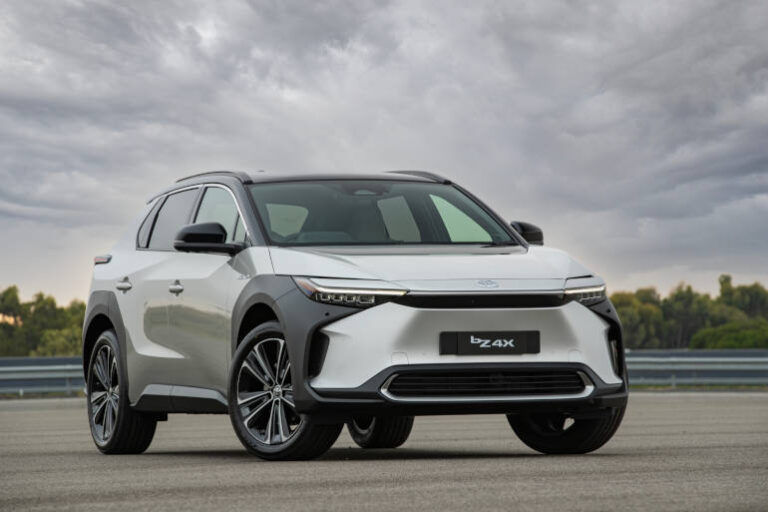
That philosophy underpins every move Toyota is making right now — from the launch of the bZ4X SUV, its first all-electric model in Australia, to the announcement that a fully electric HiLux will arrive in 2026 and a hydrogen fuel-cell HiLux in 2028.
Toyota’s plan isn’t about being first; it’s about being right.
The bZ4X: Toyota’s Measured First Step
When the first bZ4X was delivered in 2024, it wasn’t the headline-grabber that some expected. Toyota didn’t promise record range or futuristic software gimmicks. Instead, it offered something familiar — a comfortable, quiet, well-built SUV backed by Toyota’s reliability and dealer network.
The point wasn’t to dominate EV sales overnight; it was to build trust.
Hanley’s comments at the HiLux preview make that clear:
“It’s not impossible to do hybrid or BEV, but at the moment, we believe that BEV needed to get out there quickly … It’s not going to be big volume … but it is a great statement that Toyota is not anti-BEV at all.”
For Toyota, the bZ4X is less about numbers and more about normalising EVs for mainstream buyers and fleets. It’s a signal that the brand is now confident in the technology and ready to deliver it with Toyota’s usual consistency and aftersales support — the two qualities fleet buyers care most about.
Learning From the Prius Playbook
Toyota’s caution is deliberate — and it has worked before. When the Prius hybrid arrived in Australia in 2001, it was a curiosity. Dealers struggled to sell ten a month. Twenty-five years later, hybrids make up around half of Toyota’s total sales and a significant portion of fleet purchases across government, corporate, and local government sectors.
Hanley drew the comparison himself:
“When we launched the Prius, we could barely sell ten a month,” he said. “But look where we are now. It’s not about if, it’s about when. The timing has to be right.”
That timing logic now guides Toyota’s rollout of BEVs and future hydrogen models. The company knows the Australian market still faces affordability and charging infrastructure hurdles, especially outside major cities. Rather than push BEVs prematurely, Toyota wants to ensure the technology fits customers’ real-world needs — particularly fleets operating under duty cycles, distance constraints, and cost pressure.
Multi-Pathway, Not Multi-Guessing
Critics often interpret Toyota’s “multi-pathway” stance as indecision. But Hanley framed it as common sense — a reflection of how diverse the Australian market truly is.
“Decarbonisation is important,” he said, “but you can do it beyond just BEV. Some customers still demand diesel vehicles, and we’ll continue to meet that need while working with governments and partners to find solutions like hydrogen and biofuels that also address the climate challenge.”
This approach gives Toyota flexibility while allowing fleets to plan transitions at their own pace. Many large fleets — especially in mining, logistics, and utilities — already run mixed powertrain strategies: hybrids for urban use, diesels for remote areas, and trial BEVs in controlled environments. Toyota’s portfolio fits neatly into that logic.
The Fleet Perspective
For Fleet Managers, Toyota’s conservative rollout might actually make life easier. The company’s broad powertrain mix aligns with the fit-for-purpose procurement models fleets are now adopting. A BEV like the bZ4X suits metro operations or pool vehicles, while a hybrid RAV4 or Corolla Cross covers regional travel — and a future hydrogen HiLux could meet the needs of heavy-duty users chasing zero emissions without range anxiety.
It’s a spectrum of solutions rather than a one-size-fits-all push — exactly what large organisations want when juggling whole-of-life costs, infrastructure planning, and net-zero targets.
From “Anti-EV” to “EV on Toyota’s Terms”
Toyota’s critics may have to update their talking points. The company’s stance hasn’t been about opposing electric vehicles; it’s been about pacing their rollout with customer confidence and infrastructure maturity.
Hanley summed it up best with a dash of realism and humour:
“Everyone’s been writing for seven years that BEVs are going to take over the world — it hasn’t happened. Consumers need confidence. It’s not about if — it’s about getting the timing right.”
For Toyota, that timing is now. The bZ4X is the first step, the BEV HiLux will be the next, and the hydrogen HiLux will follow. Together, they mark the start of a new phase — one where Toyota isn’t late to the electric future, just arriving exactly when it means to.
Fleet EV News takeaway
Toyota’s electrification journey isn’t about chasing hype. It’s about building trust, leveraging scale, and ensuring that when fleets switch to electric — whether battery or hydrogen — they can do so with confidence that it will just work.
And if history is any guide, just like the Prius, Toyota’s “slow start” might again turn into a long-term industry lead.