

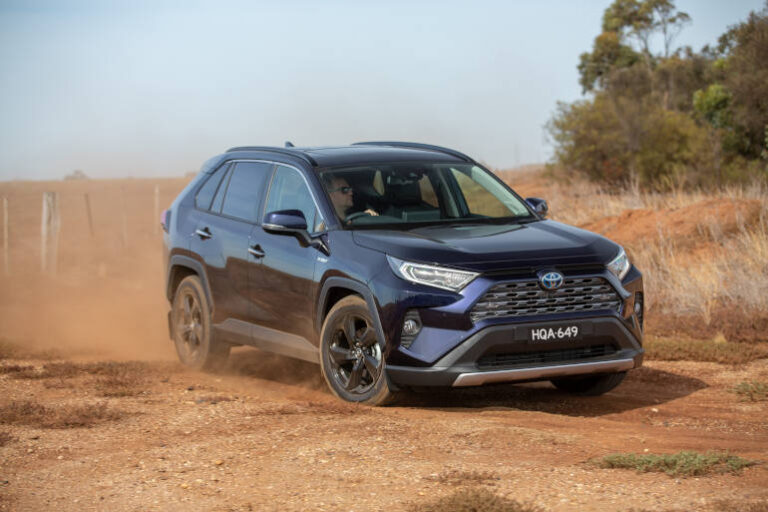
Toyota Australia has launched a safety recall covering approximately 69,586 vehicles due to a software issue that can cause the instrument panel display to remain blank when the vehicle is started. While the repair itself is relatively straightforward, the scale of the recall underscores the importance of structured recall management systems in fleet operations to avoid prolonged downtime.
What’s the Issue?
The affected vehicles feature a 12.3-inch digital instrument display—used to show the speedometer, warning lights, and system messages. Due to a programming fault, this display may remain blank after the vehicle is turned on. Drivers may have no speed reading or system alerts, increasing the risk of an incident, particularly in high-speed or high-traffic environments.
Toyota confirmed the issue stems from repeated writing of unnecessary data to a memory device in the combination meter, causing premature failure. There are no early warning signs that this failure is about to occur.
“Driving without a speedometer and any warning may result in an increased risk of an accident in certain driving conditions,” Toyota stated.
Real-World Fleet Impact: A Taxi Driver’s Story
Fleet News Group spoke to a Sydney-based RAV4 Hybrid taxi driver who experienced the fault firsthand. One morning, he turned on the ignition and the screen went completely blank—no speed display, no system information, no warning lights. He drove cautiously to a local Toyota dealership and only then discovered his vehicle was included in the recall.
The dealer confirmed the issue would require a software update and informed him the vehicle would need to remain off the road for several weeks due to parts and technician scheduling. In this case, Toyota stepped in and supplied a replacement taxi vehicle, allowing the driver to continue earning an income. However, this type of disruption across a broader fleet could have serious operational and financial implications.
Affected Models
The recall covers a broad range of Toyota models, including hybrids and internal combustion variants:
- RAV4 & RAV4 Hybrid (AXAA54R, MXAA52R, AXAH52R, AXAH54R)
- Camry Hybrid (AXVH80R)
- Kluger & Kluger Hybrid (TXUA70R, TXUA75R, AXUH78R)
- Corolla Hatch, Sedan & Cross (Hybrid & Petrol) (ZWE219R, MZEA12R, JTD B43CE, MXGH10R, MXGA10R)
- C-HR Hybrid (MAXH25R, ZYX20R)
- GR Corolla and GR Yaris (GZEA14R, GXPA16R)
Vehicles were manufactured between July 2022 and April 2025. Not every vehicle within these production dates is affected—VIN confirmation is required.
Fleet Managers can check VINs using the Toyota Recall Checker.
What’s the Fix?
Toyota dealers will update the combination meter software free of charge. The process is estimated to take 1 to 2.5 hours, depending on the model, though scheduling delays may extend vehicle downtime. Toyota will contact all registered owners and advises that vehicles are safe to drive unless the screen has already gone blank.
The Bigger Picture: Why Fleets Need Recall Response Systems
This recall serves as a reminder of the operational risk posed by vehicle software issues, particularly when no early warning signs are present. For fleets with dozens—or even hundreds—of affected vehicles, the ability to track, prioritise, and coordinate recall completion is critical to maintain service levels and avoid unnecessary downtime.
Key steps for fleet operators:
- Audit your fleet against the VIN range immediately
- Log affected vehicles in your FMIS for status tracking
- Prioritise service bookings based on usage profile and driver impact
- Communicate clearly with drivers about what symptoms to report
- Negotiate temporary replacements where vehicles are critical to operations
Why Toyota Is Well-Placed to Manage This
Despite the scale of the recall, Toyota’s extensive dealer network, established systems, and customer communication processes put it in a strong position to manage large-scale recall campaigns. The ability to offer temporary vehicle replacements—such as the one provided to the impacted taxi driver—demonstrates Toyota’s capability to support commercial operators in practical ways.
By contrast, newer vehicle brands without established dealer networks or robust customer communication systems would likely struggle to manage a recall of this size and complexity. Fleet Managers evaluating vehicle procurement options should factor in after-sales support infrastructure—not just purchase price or feature sets—when choosing suppliers.
While this recall may be resolved with a simple software update, the experience of affected drivers illustrates how unexpected faults can sideline a fleet vehicle instantly, even without warning. For Fleet Managers, this is a timely reminder to implement and regularly review their recall management processes.
Fleet Tip
Review your recall response policy. Consider setting internal service-level agreements (SLAs) for how quickly impacted vehicles should be identified, scheduled, and returned to operation. Add recall data to your FMIS for proactive tracking.