

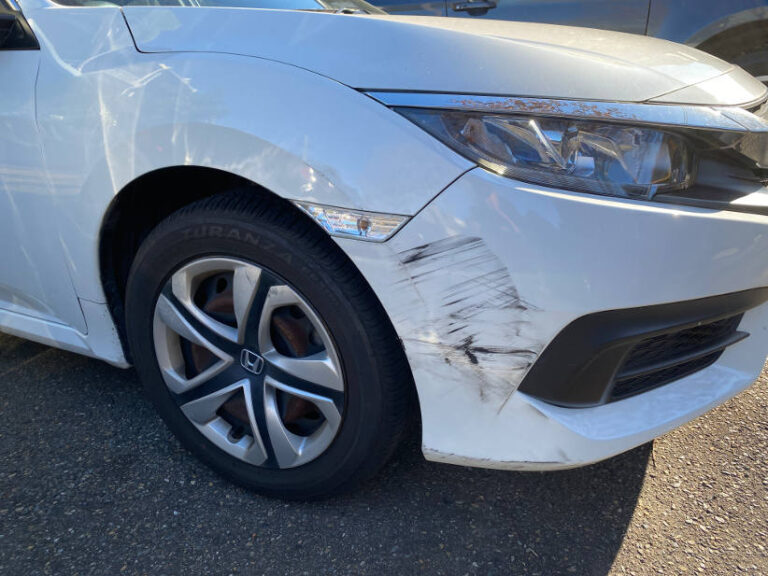
In many fleet environments, minor damage is treated as an inconvenience rather than a measurable cost. A scratched door, dented bumper or scuffed wheel rarely takes a vehicle off the road, so it is often deferred or handled informally. Over time, however, these small incidents can become one of the most underestimated cost drivers in a fleet.
According to Shaun Janks, Co-Founder and Chief DingGo at DingGo, minor damage is a persistent blind spot because it frequently falls outside structured reporting and cost controls.
“Minor damage is rarely minor by the time a vehicle exits the fleet,” Janks says. “The cost hasn’t disappeared — it’s just been delayed.”
In many organisations, incident reporting is closely tied to insurance claims. If the damage does not exceed the excess or require immediate repair, it may never be formally logged. While this can feel efficient in the short term, it undermines long-term cost visibility.
“If it’s not recorded, it doesn’t show up in your data,” Janks explains. “And if it’s not in your data, you can’t manage it properly.”
The financial consequences often surface at the end of a vehicle’s lifecycle. When assets are returned at lease end or prepared for resale, accumulated cosmetic and panel damage can result in unexpected reconditioning costs or reduced residual values.
“We regularly see fleets surprised by lease-end bills,” Janks says. “When you trace it back, it’s typically years of small, unmanaged incidents coming together at once.”
Beyond direct financial impact, visible wear and tear can affect brand perception. For customer-facing fleets, vehicle condition reflects organisational standards. Even mechanically sound vehicles can project the wrong message if cosmetic damage is left unattended.
Minor damage also creates governance challenges, particularly in shared or pool fleets. If incidents are not logged when they occur, determining timing and responsibility becomes difficult.
“In shared fleets, unreported damage quickly becomes a governance issue,” Janks says. “If no one knows when it happened, you lose the ability to manage accountability fairly.”
There is also a safety dimension. While many minor incidents appear cosmetic, some can conceal deeper issues — misaligned panels, sensor disruptions or structural impacts — that may worsen if left unchecked.
Janks is clear that the solution is not to repair every scratch immediately, but to consistently record every incident.
“Logging an incident doesn’t mean you have to fix it straight away,” he says. “It means you have visibility and can make a deliberate decision.”
When fleets capture all damage — regardless of severity — they build a more accurate picture of vehicle condition and repair frequency over time. That insight enables better budgeting, smarter repair timing and fewer end-of-life surprises.
“Once fleets start recording minor damage properly, they’re often surprised at how common it is,” Janks says. “That awareness alone can change behaviour.”
Digitised reporting systems play a central role. Manual processes, paper forms and informal emails discourage reporting, particularly for low-level incidents. Digital tools reduce friction and make it easier for drivers to report damage promptly and accurately.
“When reporting is simple, compliance improves,” Janks says. “That’s when data quality starts to lift.”
Better minor damage data also informs procurement decisions. Vehicles that appear similar on paper can have very different repair profiles once deployed in real-world conditions.
“Two vehicles may look comparable at purchase,” Janks notes, “but their repair frequency and severity over time can differ significantly. Minor damage data helps reveal that difference.”
As vehicle costs rise and governance expectations tighten, overlooking minor damage is increasingly difficult to justify. What once seemed inconsequential can quietly erode margins, residual value and operational control.
“Minor damage isn’t just cosmetic,” Janks concludes. “It’s a cost issue, a data issue and, ultimately, a fleet maturity issue.”
For fleets aiming to improve oversight, manage lifecycle costs and maintain professional standards, the discipline is straightforward: record every incident. With consistent visibility, minor damage shifts from a hidden cost to a manageable one.
- Fleet News Group launches 2026 Awards Program
 Fleet News Group has announced the launch of the 2026 Fleet News Group Awards, a new industry program designed to recognise excellence in fleet management and vehicle suitability for fleet operations. The awards program will highlight organisations and professionals that are delivering measurable improvements in safety, efficiency, sustainability and operational performance through better fleet management. At
 - Continental Builds Brand Presence as Tyre Technology Evolves with the Shift to Electric VehiclesContinental used its presence at the 2026 Melbourne Motor Show to reinforce its long-term commitment to the Australian market while highlighting how tyre technology is adapting to changing vehicle trends, particularly the growth of electric vehicles (EVs). For fleet buyers and Procurement Managers, tyres are often viewed as a routine operating cost. But as vehicle
- Triton 2025: The Fleet Ute That Beats Ranger & HiLux on Whole of Life CostsThe 2025 Mitsubishi Triton GSR Dual Cab Chassis makes a strong case as a fit-for-purpose fleet ute, especially when whole-of-life costs are the priority. In a market dominated by the Ford Ranger, Toyota HiLux and Isuzu D-Max, Triton sits just behind the leaders in sales, but its value proposition is where it stands out. When
- People Moves in MarchMarch delivered another round of leadership and career moves across the fleet and automotive sector, reflecting the changing shape of the industry. As electric vehicles continue to gain share in new car sales, new roles are emerging in areas such as electrification, energy management, and customer support. At the same time, many professionals are choosing
- Hybrid Power Expands Hyundai STARIA RangeHyundai has refreshed its popular people mover and light commercial van range with the introduction of the 2027 STARIA and STARIA Load, adding a new hybrid powertrain and confirming that a fully electric van will arrive later in 2026. For Fleet Managers and novated lease buyers, the update is less about styling and more about choice. The expanded