
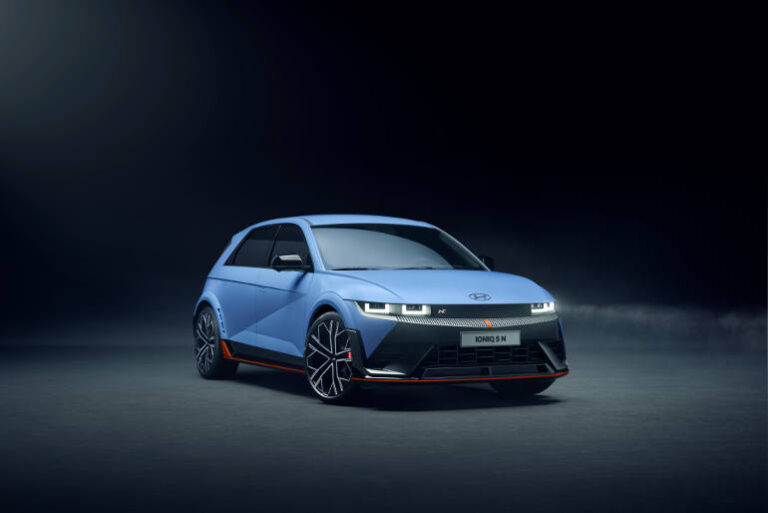
Australia’s new-car market is facing its most challenging period in decades, driven by an unprecedented influx of new brands, tightening emissions regulation and growing pressure on dealer networks. That assessment came through clearly during a wide-ranging discussion with Hyundai Australia executives at a vehicle launch in late 2025, where the tone was notably frank about what lies ahead for the industry.
Rather than framing the changes as a short-term disruption, Hyundai described a market undergoing a structural reset — one that will test which brands are genuinely equipped to operate in Australia over the long term.
More brands, less margin
Hyundai Australia Chief Executive Officer Don Romano pointed to the sheer volume of new entrants as a defining challenge.
“I think there’s four more new brands that are not out there today. They’re going to be out next year.”
For fleet buyers, that expansion may appear positive on the surface, with more choice and sharper pricing. However, Romano suggested the pressure will be felt most acutely by dealer networks, where profitability has already been eroded.
“Over the past five years, dealer profitability has gone straight down… dealers that used to make three to four per cent are making zero to one per cent right now.”
That economic reality raises questions about which brands will be able to sustain investment in service, training and parts support — all critical considerations for fleet operators.
Why experience is becoming a differentiator
Hyundai’s leadership was clear that not all brands will navigate this phase successfully. The concern is not product alone, but what happens after the sale.
Romano explained that issues such as warranty reimbursement speed, policy clarity and customer follow-up often determine whether a brand builds trust or erodes it.
“When you make a promise to a customer, can you deliver on that promise? I think there’s a lot of learnings for new brands when it comes to that.”
For fleets, those “learnings” translate directly into downtime, risk and cost. A lower purchase price means little if a vehicle cannot be repaired quickly or supported consistently across the country.
Regulation adds another layer of complexity
Alongside competition, the market is also adjusting to policy change. Emissions regulation, including NVES, is reshaping product planning and powertrain mix across all manufacturers.
Hyundai’s response has been to avoid placing all its bets on a single technology. Instead, the brand is leaning into choice— internal combustion, hybrid and electric — while acknowledging that compliance pressure will continue to grow.
That approach reflects the reality facing many fleets, where operational requirements do not always align neatly with regulatory ambition.
Dealers under strain — and why that matters to fleets
Hyundai executives spent considerable time discussing the state of dealer networks, describing them as both under pressure and central to future success.
Gavin Donaldson, Chief Operating Officer, highlighted that improving dealer confidence and capability is now a strategic priority.
“We’re starting to see improvements… but one year or six months does not make history. It’s just a starting point.”
Donaldson noted that service metrics such as “fix it right the first time” and customer satisfaction are improving, but cautioned that sustained progress will be required before dealers can absorb further investment demands.
For fleet buyers, the implication is clear: brands that fail to stabilise their dealer networks may struggle to meet fleet service expectations, regardless of how competitive their product looks on paper.
Not all competition is equal
While Chinese-backed brands are often cited as the biggest disruptors, Hyundai’s view is more nuanced. Romano suggested that strong, established brands with scale, capital and diversified global operations are better positioned to weather the storm.
“There’s only a couple of big brands capable of keeping up with the technology… and also achieving a standalone profitable business.”
In that context, the next few years may see consolidation not through exits, but through relevance — with some brands failing to secure fleet trust even if they remain present in the market.
What fleet buyers should take away
For fleet managers, procurement teams and policy leaders, Hyundai’s assessment offers a useful lens on what to watch as the market tightens:
- More brands does not automatically mean lower risk
- Dealer profitability directly affects service outcomes
- Regulatory pressure will reshape line-ups, not eliminate core segments
- Long-term support capability may matter more than launch pricing
- Fleet reputation is earned over years, not model cycles
Australia’s new-car market is no longer defined by steady growth and predictable players. It is entering a phase where resilience, process and support will matter as much as product.
As Romano put it, the challenge is knowing where to focus attention in a market that is becoming more crowded by the year:
“You’ve got to look through the windshield, not the rear-view mirror.”
The message was not to ignore the competition coming up behind, but to avoid being consumed by it. Hyundai’s view is that brands win by focusing first on what market leaders do well — while still keeping a close eye on new entrants to ensure they are not caught out.