

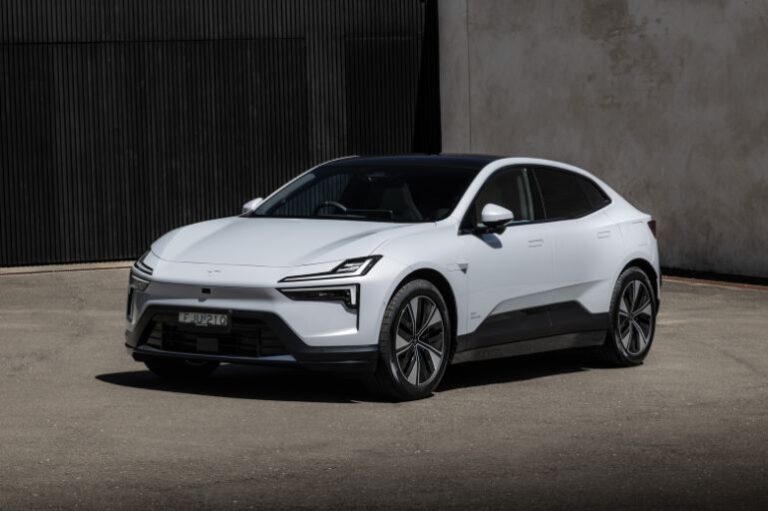
Electric vehicle sales continued to strengthen in March, with major brands reporting rising demand as fuel price volatility reshapes consumer behaviour and strengthens industry support for the Electric Car Discount.
New data released by the Electric Vehicle Council shows EV sales for two leading brands increased significantly in early 2026, reinforcing the argument that policy settings supporting affordability remain critical to sustaining momentum.
Tesla and Polestar recorded combined sales of 3,645 vehicles in March 2026, representing growth of 21.1 per cent compared with the same month last year and a 6.6 per cent increase from February. Across the first quarter of 2026, the two brands sold 7,725 vehicles, up from 5,549 in the same period in 2025 — a 40 per cent increase year-on-year.
The figures come amid heightened concern about international fuel supply and rising petrol prices, which industry leaders say is accelerating the shift toward electric vehicles.
Julie Delvecchio, Chief Executive Officer at the Electric Vehicle Council, said the surge in demand reflects a broader change in consumer thinking.
“With fuel prices rising, every EV on the road is doing something simple but powerful – taking pressure off fuel supply for the people who need it most.”
Delvecchio said global market instability is prompting Australians to reconsider their vehicle choices.
“Volatile global oil markets are changing the conversation. Australians aren’t asking whether EVs are the future anymore. They’re asking which one they can get their hands on, and when.”

Carmakers Report Strong Demand as Running Costs Drive Interest
Automotive manufacturers reported similar trends, pointing to operating costs and energy security as key drivers of customer demand.
Thom Drew, Country Director for Australia and New Zealand at Tesla, said supply levels are being increased to meet rising demand.
“The fuel crisis is pushing Australians to look for more certainty – both on energy and cost of living – and EVs are delivering exactly that.
We’re seeing strong customer demand clear out local stock, so we’re ramping up Q2 supply, with more vehicles arriving over the coming weeks.”
Scott Maynard, Managing Director of Polestar Australia, said customer urgency has increased significantly in recent weeks.
“There is a clear sense of urgency from customers, which is driving strong order volumes. Interest in Polestar’s electric cars is surging in Australia.”
The trend is not limited to passenger vehicles. Commercial vehicle brands are also seeing increased engagement from fleet buyers exploring electrification options.
Nathan Johnson, Brand Director of Volkswagen Commercial Vehicles Australia, said businesses are increasingly focused on operating cost savings.
“We’re seeing steady growth in enquiries and conversion for electric Volkswagen passenger and commercial vehicles, with more businesses exploring how EVs can reduce operating costs in everyday use.”
Market Conditions Accelerating the Shift to EVs
Manufacturers say the current environment — marked by rising fuel prices and geopolitical uncertainty — is accelerating the transition to electric vehicles rather than initiating it.
Gavin Donaldson, Chief Operating Officer at Hyundai Australia, said market conditions are driving stronger uptake.
“Hyundai is seeing a clear increase in consumer interest in electric vehicles as Australians respond to rising petrol prices and heightened global fuel market uncertainty. These conditions are accelerating the shift toward EVs.”
Similarly, Jeff Mannering, Brand Director at Audi Australia, said improving customer knowledge is contributing to stronger demand.
“What we’re seeing now is a maturing BEV and PHEV market where customers arrive with a better understanding of the technology, charging and real-world range.”
Industry Pushes to Retain Electric Car Discount
Industry leaders have also united behind calls to maintain the Electric Car Discount, arguing that removing the policy could slow adoption and increase costs for households and businesses.
Julie Delvecchio, Chief Executive Officer at the Electric Vehicle Council, said the current policy settings are critical to keeping electric vehicles accessible.
“The Electric Car Discount, currently under review, is making EVs more available than ever before. Removing or scaling it back risks depriving Australians of $3,000 a year in savings on fuel and maintenance costs.”
For fleet managers, the March sales results reinforce a familiar theme: the transition to electric vehicles is increasingly being driven by economics and risk management rather than environmental messaging alone.