
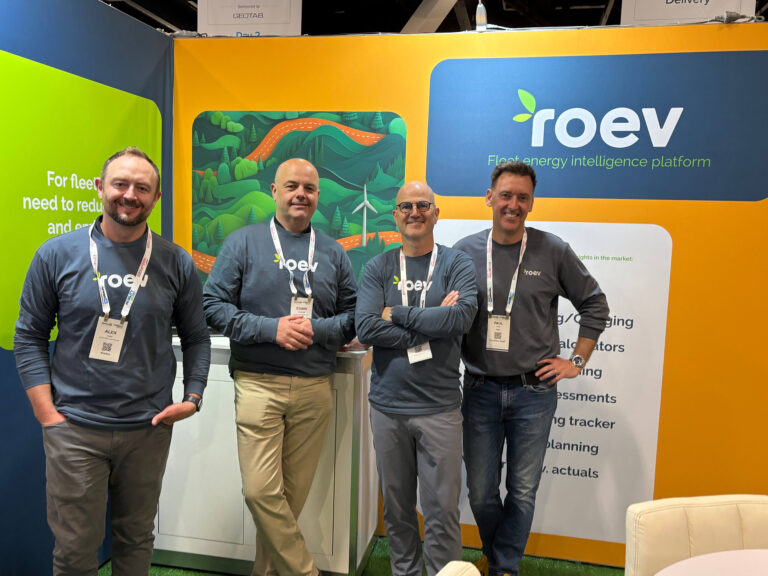
Sydney’s Mobility Live Australia 2025 once again proved why it’s become the flagship event for the nation’s transport and fleet community. Across two packed days, conversations focused on data, electrification, and efficiency — with exhibitors like ROEV and Geosecure highlighting the technologies and partnerships driving fleet transformation.
ROEV: Software That Simplifies the EV Transition
For ROEV, the discussions at Mobility Live reflected how far Australia’s fleets have come in their readiness to embrace electric vehicles.
“We’ve had some great conversations with councils and fleet managers,” said Paul Slade from ROEV. “It’s really encouraging to see that push for transitioning to EVs and how ROEV could help them do that more quickly.”
The company’s software helps organisations model their fleet’s journey to electrification using existing data — such as fuel consumption and utilisation — to determine when and where EVs can be deployed cost-effectively.
It’s a data-first approach that eliminates guesswork and accelerates decision-making, allowing fleet managers to build realistic business cases and charging plans.
Slade said the response from attendees showed that many organisations are now ready to move from planning to action.
“We’ve talked to a lot of other software vendors in the ecosystem, so it’s been great to connect with partners and customers alike,” he said. “There’s a real sense that 2026 could be the tipping point for large-scale EV adoption.”
ROEV’s presence at Mobility Live highlighted the crucial role of collaboration between technology providers, councils, and industry partners in achieving Australia’s transport decarbonisation goals.
Geosecure: Automation, Emissions, and Efficiency
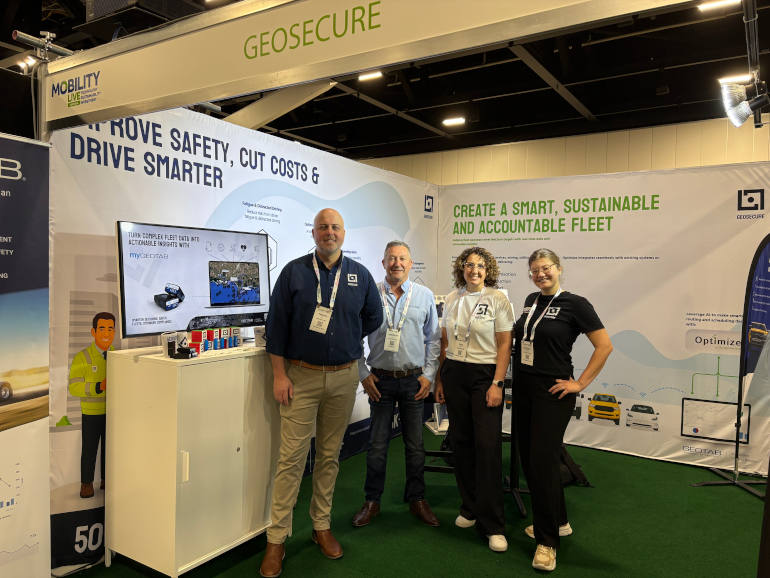
Across the exhibition floor, Geosecure attracted steady traffic with its intelligent fleet management and asset visibility platform — designed to help organisations improve efficiency and reduce emissions through automation and analytics.
“It’s been really good — great setup, great content, great speakers, and the attendees have been awesome,” said Andrew Hutson from Geosecure. “The conversations have been around automation, electrification, emissions monitoring, and ultimately, efficiencies right across fleet operations.”
Geosecure’s technology helps fleets integrate vehicle and equipment tracking into their operational systems, providing real-time data on utilisation, maintenance needs, and energy performance.
The company’s message aligned closely with the broader theme of Mobility Live: using smart data to enable smarter fleet decisions — whether that’s reducing idle time, optimising routes, or managing the transition to low-emission operations.
Data and Collaboration Driving the Future
Between ROEV and Geosecure, a clear theme emerged at Mobility Live 2025 — data is the foundation of every successful fleet strategy. From EV adoption to emissions reduction, the event showcased how technology and cooperation are helping fleets move from compliance-driven decisions to performance-driven outcomes.
“Automation and electrification aren’t isolated projects anymore,” one exhibitor said. “They’re connected by data — and that’s what events like Mobility Live make possible: getting everyone in the same room to share, learn, and build together.”
As fleets continue to adapt to Australia’s new vehicle emissions standards and rising sustainability expectations, the insights shared at Mobility Live make one thing certain — the road to smarter, cleaner transport will be paved with data, innovation, and collaboration.
- Whole-of-Life Winner? Triton Makes Its Move
 Three of Australia’s top four best-selling vehicles are 4×4 utes — Ford Ranger, Toyota HiLux and Isuzu D-Max. So where does the Mitsubishi Triton sit in that pecking order for fleet buyers in 2025? The real question isn’t styling or badge appeal. It’s whole-of-life cost, suitability and return on investment. And that’s where Triton makes its case. Whole-of-Life Costs:
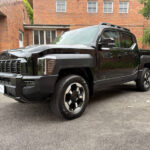
 - Kia Tasman X-Line Review: Different by Design, but Is It Right for Fleet or Novated Buyers?The Kia Tasman has arrived in Australia with plenty of noise, plenty of opinion, and no shortage of scrutiny. In a dual-cab ute market dominated by household names like HiLux and Ranger, simply turning up isn’t enough. Kia knows that — and the Tasman X-Line is its statement that it’s prepared to do things differently.
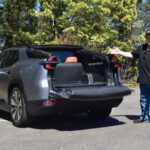
- Deepal E07 review: good, different – and unapologetically cleverThere are plenty of electric SUVs around right now. The Deepal E07 isn’t really one of them. It looks like an SUV, borrows ideas from a ute, behaves like a panel van when you need it to, and still delivers a premium EV experience. As I said on the drive, it’s good, it’s different –
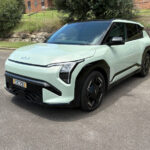
- Kia EV3 GT-Line review: the novated lease splurge that actually makes senseThere are fleet cars you buy with your head, and novated lease cars you buy with your heart. The Kia EV3 GT-Line sits very comfortably in the second camp. At close to $70,000 drive-away, this isn’t the EV3 for fleet policy spreadsheets. It’s the one you choose when you want a compact SUV with a premium feel
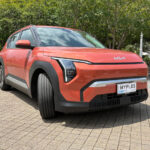
- Kia EV3 Air review: a compact EV that makes sense for fleetsThe Kia EV3 Air might sit at the smaller end of the SUV spectrum, but it’s a good example of how “small” has grown in 2026. In this base model, the EV3 Air presents as a genuinely practical option for fleets, and organisations looking to reduce emissions without compromising usability. It’s well suited to a