

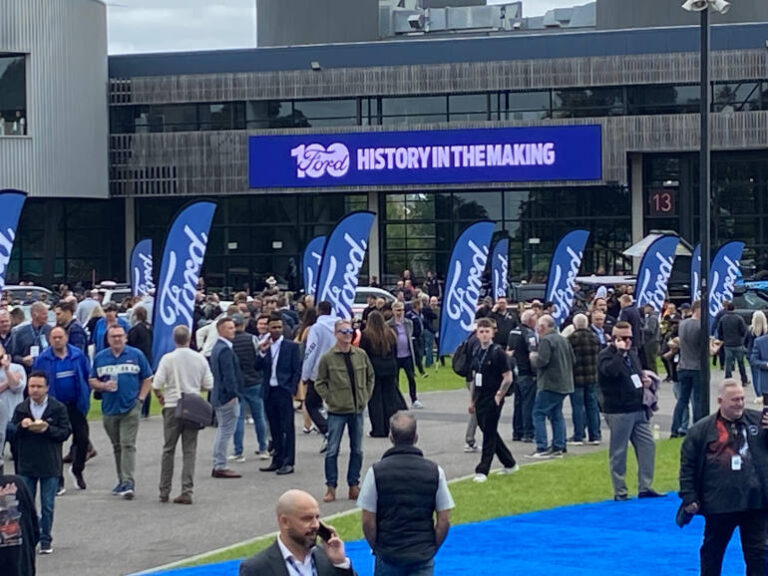
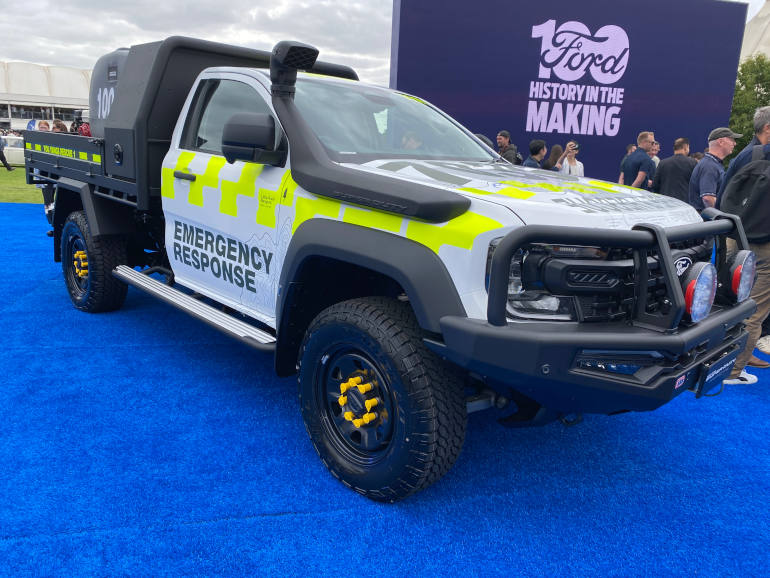
Ford Australia celebrated its 100th anniversary in April with a landmark event that not only honoured the company’s rich local history but also looked firmly to the future — marked by the unveiling of the new Ranger Super Duty.
Speaking at the event, Andrew Birkic, President and CEO of Ford Australia, highlighted how the Ranger Super Duty reflects the strength of Ford’s ongoing investment in Australian automotive design and engineering.
“You can see what we’re presenting today — the Australian team, very talented designers and engineers — we’ve invested in the Ranger PHEV and now the Ranger Super Duty,” Birkic said. “It gives you a pretty strong indication of where we keep investing.”
Built With Fleet Needs in Mind
Birkic wouldn’t be drawn on exact sales projections, but he confirmed that fleet customers — particularly in emergency services, mining, construction, agriculture and energy — played an important role in shaping the new vehicle.
“We’ve had extensive collaboration with a lot of our customers,” he explained. “Australia’s a big country with scattered communities. We believe this is the type of vehicle — with additional fuel tanks, off-road capability, towing and payload capacity — that meets those requirements.”
For fleet operators concerned about safety ratings, Birkic confirmed that maintaining a strong ANCAP rating remains a priority: “Ranger is five star today,” he said — an important box to tick for many government and corporate buyers.
Addressing NVES and Fleet Electrification
With Australia’s New Vehicle Efficiency Standard (NVES) now in place, many fleet managers are weighing their next moves on electrification.
Birkic said plug-in hybrid (PHEV) powertrains are an important tool to help both Ford and its customers manage the transition.
“PHEV is an important part of the mix,” he said. “But it has to be customer driven. That’s what will drive your sales. That’s why we’ve built a vehicle that offers the best of both worlds — towing, payload, off-road capability — and electrification where it makes sense.”
While Ford will continue to offer internal combustion engine (ICE) options — “because that’s what customers want”— the company is also pivoting in line with changing regulations and customer expectations.
“We’ve had to pivot towards PHEVs — for example, with Transit — and we’ll continue to do that based on what customers want,” Birkic said.
Importantly, PHEVs are no longer a hard sell.
“If you look at VFACTS data, you’ll see significant growth in PHEV sales,” Birkic said. “It’s a very practical solution and a great transitionary technology that customers understand. Add in Pro Power Onboard — it becomes even more flexible for tradies and off-grid users.”
Dealer Network Expansion and Factory-Ready Practicality
As Ford prepares to bring Ranger Super Duty to market in 2026, it is working closely with its dealer network to ensure fleet buyers have access to the parts, service and support they expect.
“We’re talking to dealers about locations where we’re not today,” Birkic said. “Parts and service are an incredible part of the business — customers want capability, but they also want to keep their vehicles on the road.”
For fleet buyers, one of the key advantages is that Ranger Super Duty will be factory-built, avoiding the added cost and complexity of aftermarket conversions.
“There’s something quite unique and special about this vehicle,” Birkic said. “It comes off the Ranger platform, and it’s out of the factory — no conversions required. Things like onboard scales make it very practical — and that’s what we want to do with trucks.”
A New Chapter in Ford’s Australian Story
Ford made headlines in 2011 when it redefined the ute segment with the launch of Ranger Wildtrak and Ranger Raptor. Could Ranger Super Duty deliver a similar leap forward?
“I’m very excited about the prospects,” Birkic said. “When I first saw the clay models in the design studio, I got pretty excited. Hopefully you can see that too.”
For fleet buyers, Ranger Super Duty offers a compelling new option — factory-built capability with the features and flexibility modern businesses demand.
With its sights set on the future, Ford Australia is clearly determined to remain a leader in the segment as it begins its second century of local innovation.




