

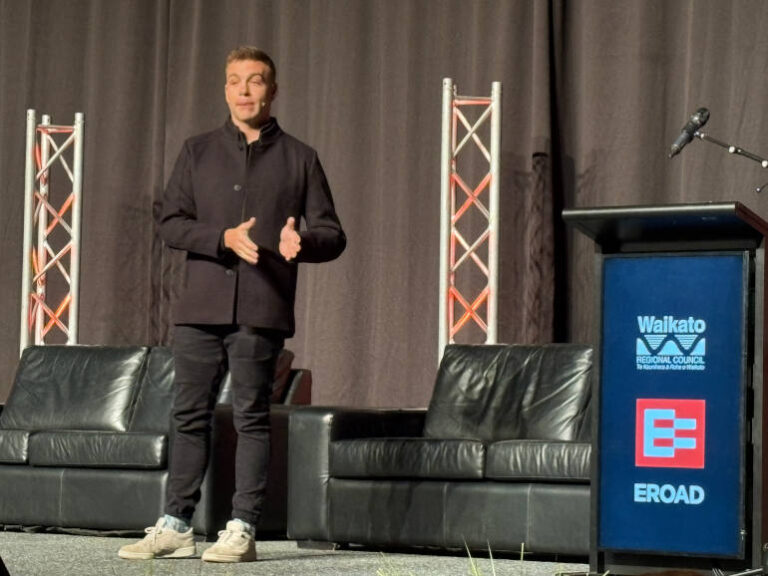
At EROAD Fleet Day, Hayden Paddon took the stage not just as a rally driver but as a strategist, entrepreneur, and passionate road safety advocate. His personal journey—stretching from Geraldine to the gravel tracks of the World Rally Championship—offered fleet operators and transport professionals a masterclass in leadership, resilience, and long-term thinking. But beyond the motorsport glamour, Paddon’s message was grounded in fundamentals familiar to every Fleet Manager: setting goals, managing risk, building partnerships, and prioritising safety.
Strategic Thinking and Long-Term Planning
Paddon’s childhood dream of becoming a World Rally Champion began with a simple, bold goal. By age 13, he had already started cold-calling local business managers for $100 sponsorships. That ambition eventually morphed into a $10 million self-funded international rally career, and a 12-year partnership with Hyundai New Zealand.
For fleet managers, this kind of vision and structured goal setting is essential. “Every event we go to, I’ve got a goal. Every stage, I’ve got a goal,” Paddon explained. Long-term goals give direction, but it’s the short-term, incremental ones that deliver traction.
Takeaway for fleets: Set five-year strategic fleet plans, but break them into one-year and quarterly targets—whether that’s improving vehicle utilisation, reducing emissions, or boosting safety KPIs. Micro goals create momentum.
Managing Measured Risk
In rally, risk is constant—but as Paddon pointed out, it’s not about being reckless. “There’s a difference between good risk and dumb risk. Good risk is measured. It’s knowing your strengths, knowing your weaknesses, and backing yourself where it counts.”
Fleet professionals can relate. Choosing when to stretch replacement cycles, when to trial EVs, or how to implement driver telematics all involve risk. But like rally, they’re best managed when based on data and self-awareness—not just adrenaline.
Paddon’s example: Flying 80 metres over a jump sounds thrilling—but he’d often back off to avoid damage and make up time in the next corner. “That jump’s not worth it,” he’d decide. Fleet managers too must learn when to hold back to protect long-term performance.
Building Partnerships with Purpose
Whether asking for $100 or signing six-figure deals, Paddon’s philosophy never changed: under-promise and over-deliver. It’s what helped him build relationships with sponsors like Z Energy and Winmax that lasted over a decade.
This loyalty-first mindset is powerful in the fleet sector. Whether you’re working with OEMs, telematics providers, leasing companies, or insurers, strong partnerships require consistency, transparency, and a long-term view.
Takeaway for fleets: A multi-year partnership with your fuel card provider or OEM might not always offer the cheapest deal today—but may create better support, data access, and innovation opportunities tomorrow.
Road Safety: From the Track to the Tarmac
Perhaps the most unexpected—and powerful—part of Paddon’s keynote was his shift into driver education and public safety. Rallying has given him deep respect for vehicle dynamics and risk, and he’s now applying those lessons to improve road safety in New Zealand.
“Driving is not a god-given right,” he said. “You need to treat it with respect.”
He’s developing youth programs that offer motorsport experiences in controlled environments to teach young drivers how to read road conditions, handle vehicles, and stay calm behind the wheel. He noted that the best cars in the world can’t save you if the driver is untrained—or in a rush.
Fleet Managers take note: Paddon’s advice that “a calm driver is a competent driver” resonates with efforts to reduce crashes in fleet operations. Allowing more time in scheduling, investing in defensive driver training, and reviewing telematics data to identify risky behaviours are all ways to apply this mindset in business.
Don’t Let the Past Define the Future
Paddon also spoke openly about setbacks. In 2017, he faced a personal and professional low point—from fatal crashes to contract losses. The key lesson? Reset when needed. “We had to find the reset button and go back to basics to enjoy it again.”
Fleet Managers often face similar fatigue—budget cuts, vehicle delays, policy changes. Recalibrating plans, stepping back, and rediscovering the ‘why’ can help restore clarity and momentum.
Technology with Purpose
His passion project—the world’s first electric rally car—emerged from a need to stand out and move the sport forward. Today, that EV tech is being adapted for marine, agricultural and commercial vehicles, making motorsport a launchpad for sustainable transport solutions.
Insight for fleets: If motorsport can pivot to EVs and hydrogen, so can your fleet. Use data and trials to de-risk innovation. As Paddon reminded the audience, “If we’re standing still, we’re going backwards.”
Final Word: Fleet Leadership is a Rally, Not a Sprint
From Paddon’s journey, it’s clear that success—whether in rally or fleet management—requires a blend of passion, planning and patience. The key messages he left with fleet operators are timeless:
- Set goals that drive you forward, not just ones that look good on paper.
- Build partnerships rooted in loyalty and shared values.
- Embrace risk—but always with a strategy.
- Don’t neglect the human side of safety—because every crash avoided starts with driver mindset.
- Be bold in trying new technologies—but keep the business case strong.
Hayden Paddon isn’t just inspiring for what he’s done behind the wheel—but for how he’s mapped that discipline and drive into a leadership philosophy that every fleet can learn from.