
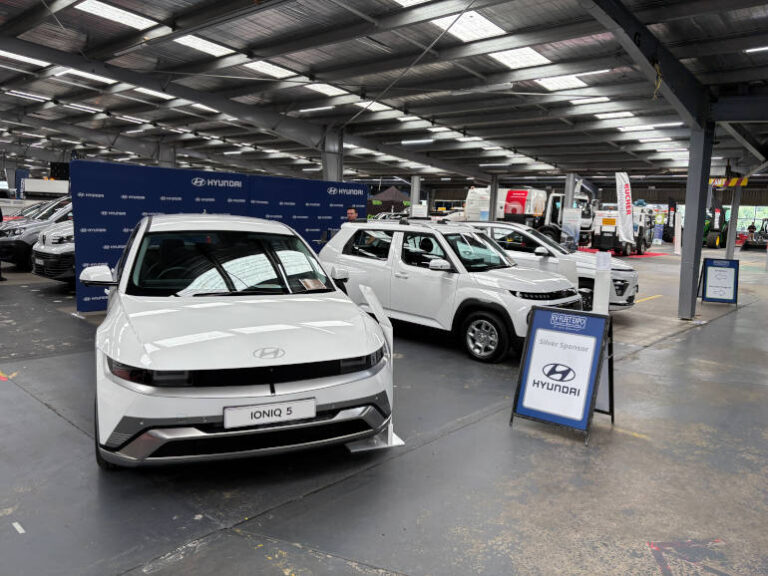
Hyundai Australia has reaffirmed its long-term commitment to the fleet sector, with Chief Operating Officer Gavin Donaldson outlining how the business has reset its strategy while maintaining fleet as a core pillar.
In a discussion about Hyundai’s position heading into 2026, Donaldson made it clear that fleet remains central to the company’s mix.
“Fleet for us has always been an integral in our business. It’s approximately 21–22% of our business mix,” he said.
Resetting the business – without walking away from fleet
Donaldson acknowledged that Hyundai’s overall business underwent a reset during and after COVID, particularly around profitability and quality of earnings.
“Coming into COVID and post COVID, our business reset, and it required a reset,” he said. “We’d been selling a lot of volume, probably pre-2021, 2022, not overly a profitable car company. And we had to reset our business.”
Part of that reset involved tightening up quality metrics across the network. “One of that was just getting some quality of business metrics correct.”
However, Donaldson rejected the idea that Hyundai exited fleet during this period.
“It’s important to note, even during that time, we were still doing fleet. It’s probably we just changed the structure and strategy around how it is.”
He added that supply constraints during COVID inevitably impacted volumes, but fleet remained part of the dealer opportunity.
“During COVID, we were limited with supply, and that just was a by product. We still gave the dealers the opportunity to do fleet business.”
Donaldson acknowledged perceptions in the market.
“I can fully understand where it can be seen that we may have walked away from fleet… but we’re very proactive back with some key direct rentals. We’ve got a very strong fleet program. It’s 20% of our business, and rest assured, it’s a vital part of our business.”
State-based fleet structure
Hyundai has strengthened its fleet capability with a state-based model supported by head office oversight.
“We have individual state managers that work with fleet that code back into our head office,” Donaldson explained.
The current structure includes:
- Northern Region – Martin Him (also responsible for commercial, direct rental and novated strategy)
- Eastern Region – Gina Sim
- Southern and Central – Damien Prescott
- Western Region – Megan Jerling
“We’ve strengthened our fleet team. We’ve even strengthened our fleet team internally as well.”
Fleet for Hyundai is defined around national fleet, premium fleet, government and direct rental segments.
“For us, we look at fleet through the lens of obviously large fleet… premium fleet… government… and then we look through the direct rental lens.”
Direct rental accounts for a relatively small portion. “I think direct rentals was about one and a half percent of our business.”
EV pricing and residual value discipline
Fleet buyers have been watching EV pricing closely, particularly after sharp adjustments across the market in recent years. Donaldson said Hyundai has learned from earlier pricing resets.
“There was no doubt there we had to reset the business in regards to some of our previous roles with EV… we learned a lot from.”
He said the focus now is long-term residual value protection.
“The number one thing we’ve got to be conscious of is the residual values of the cars. That is the driver of what it was all about for us.”
“There’s no doubt there was a couple of EVs that were probably impacted the residual values, but we’re confident that we’ve got it set up right now that it won’t impact that in the long term.”
For Fleet Managers and Procurement Managers, that comment signals a more disciplined pricing approach designed to reduce volatility in whole-of-life cost modelling.
The case for a Hyundai ute
Donaldson also acknowledged the importance of the ute segment to both retail and fleet buyers.
“We all should be hanging out for a ute. It’s definitely on Hyundai’s boards. We know it’s got to be.”
He pointed to the size of the segment and its fleet relevance.
“It’s 20% of the market, and it’s not just private. There is fleet opportunities inside of that.”
Donaldson said Hyundai has confidence it could migrate existing fleet relationships into a ute product if and when it arrives.
“We do have some strong fleet people that I know very confidently that if we had the right ute, they would migrate to our product straightaway.”
For now, he confirmed it remains in development planning.
“It’s still on the drawing board. It’s still in the future, and we’re doing everything possible we can to get a ute quicker, sooner rather than later.”
What it means for fleet buyers
For organisations assessing manufacturer commitment to fleet in 2026, Hyundai’s position is clear:
- Fleet remains around one-fifth of total business.
- A dedicated, state-based Fleet Sales Team is in place.
- EV pricing strategy is now built around residual value stability.
- A ute program is under active consideration due to strong fleet demand.
Donaldson’s closing reassurance may be the simplest summary of Hyundai’s intent:
“Rest assured, it’s a vital part of our business.”