
The sudden surge in used electric vehicle (EV) demand across Australia has caught the attention of Fleet Managers and remarketing teams alike. Clearance rates are rising, selling times are shrinking, and prices are moving in the opposite direction to what many expected only 12 months ago.
But this is not the first time the automotive market has shifted rapidly in response to economic pressure. History shows that fuel price spikes and financial uncertainty have repeatedly reshaped vehicle demand—and each time, fleets have adapted their procurement and disposal strategies.
According to Brendon Green, General Manager Automotive Solutions at Pickles, the current surge in EV demand has clear historical parallels, even if the speed of change feels unprecedented.
The 2008 Fuel Shock: When Fleets Downsized Overnight
One of the most relevant comparisons comes from the late 2000s, when fuel prices surged and buyers rapidly shifted away from large sedans.
At the time, fleets and private buyers moved from traditional six-cylinder vehicles such as Commodores and Falcons into smaller, more fuel-efficient cars. It was a structural shift in vehicle preference driven by operating cost pressure rather than technology innovation.
Brendon said that period remains the closest historical reference point for what is happening today.
Brendon Green, General Manager Automotive Solutions at Pickles, said the industry saw a similar behavioural change when fuel costs last spiked.
“Everybody started to shift and move across into the smaller hatches and the smaller petrol cars. There was a big shift in what fleets were acquiring and therefore selling.”
The difference today is not the cause—but the speed.
“Nothing accelerated like this. It just was over time. This has really just been ignited by fuel spiking.”
For Fleet Managers, the lesson is familiar: when operating costs change quickly, vehicle demand changes quickly too.
The GFC and COVID: Used Vehicles Become the Safe Option
Another pattern from history is the surge in used vehicle demand during periods of economic uncertainty.
During both the Global Financial Crisis and the COVID disruption, buyers prioritised affordability and liquidity. Rather than committing to new vehicle purchases, organisations and households sought to control spending by moving into the used market.
Brendon noted that this behaviour remains consistent.
“Used vehicles become a flavour because people want to control their spend and get money in the bank and focus in on used vehicles.”
However, he emphasised that the current surge in used EV demand is more extreme than anything seen during those previous downturns.
“We’ve seen spikes in used vehicles through challenging economic times… but nothing to this extreme where it’s just an absolute hockey stick in reaction.”
That distinction matters for fleet planning. This is not simply a cyclical market response—it may represent a structural change in vehicle demand.
The Current Shift: From Fuel Efficiency to Fuel Independence
What makes the current market different from previous transitions is the objective of buyers. In the past, fleets moved to smaller vehicles to reduce fuel consumption. Today, many buyers are seeking to eliminate fuel costs altogether.
Brendon said cost-of-living pressures are the dominant driver behind the surge in EV demand.
“Customers are trying to control the cost of living and tap into low fuel costs and low maintenance costs.”
This shift from fuel efficiency to fuel independence is reshaping the used vehicle market. Recent market activity reflects this change:
- Record monthly EV sales volumes
- Significant increases in website searches and buyer registrations
- Faster selling times for used EVs
- Rising resale prices for key models
These indicators suggest that demand is being driven by operational economics rather than environmental messaging.
Price Signals: EV Values Are Moving Up, Not Down
For many Fleet Managers, the biggest concern over the past few years has been residual value risk. Early EV adopters experienced sharp depreciation, creating uncertainty in replacement planning and lease pricing models. The recent market movement suggests that risk profile may be changing.
Brendon said prices for some EV models have already begun to rise.
“On Model 3 Teslas, in the last two weeks we’ve seen them jump up by $1,000 to $4,000 in price.”
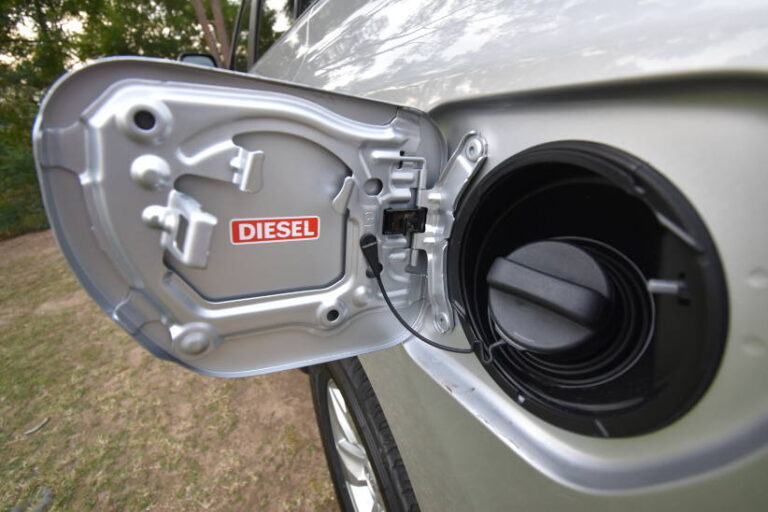
At the same time, traditional vehicles have stabilised rather than collapsed. Diesel vehicles remain resilient, while petrol vehicles are showing slightly softer demand. Importantly, overall sales volumes remain steady.
This indicates a rebalancing of demand rather than a decline in the broader used vehicle market.
What History Suggests About the Next Phase
Historical market shifts tend to follow a predictable pattern:
- Operating costs rise
- Buyers change vehicle preferences
- Fleet procurement strategies adjust
- Residual value assumptions stabilise
The current EV surge appears to be following the same trajectory. Brendon believes the growing number of EV buyers will ultimately support stronger resale performance over time.
“The buyer base is growing, and that should in turn create more competition on used EVs long term and therefore help to retain more price from a residual value standpoint.”
For Fleet Managers, this has direct implications for:
- Replacement timing
- Lease rate modelling
- Residual value forecasting
- Disposal strategies
The Strategic Takeaway for Fleet Managers
History shows that vehicle demand shifts are rarely permanent—but they are rarely random either. They are driven by cost pressures, technology availability, and buyer confidence.
Today’s surge in used EV demand sits at the intersection of all three. Fuel prices have increased operating costs. EV technology has matured. Buyer confidence has improved.
Together, those factors are creating a market environment that feels new—but follows a pattern the fleet industry has seen before. The key difference this time is speed.
- The Day a Loaded Ute Met a Loaded Truck
 It started as a straightforward comparison. Same load. Same conditions. Same job. But this wasn’t a random test. It was part of a deliberately staged demonstration run by Isuzu Trucks in March, where a group of motoring journalists were invited to put light trucks and utes through identical tasks. The objective was clear enough: show —
 - Whole-of-Life Winner? Triton Makes Its MoveThree of Australia’s top four best-selling vehicles are 4×4 utes — Ford Ranger, Toyota HiLux and Isuzu D-Max. So where does the Mitsubishi Triton sit in that pecking order for fleet buyers in 2025? The real question isn’t styling or badge appeal. It’s whole-of-life cost, suitability and return on investment. And that’s where Triton makes its case. Whole-of-Life Costs:
- Kia Tasman X-Line Review: Different by Design, but Is It Right for Fleet or Novated Buyers?The Kia Tasman has arrived in Australia with plenty of noise, plenty of opinion, and no shortage of scrutiny. In a dual-cab ute market dominated by household names like HiLux and Ranger, simply turning up isn’t enough. Kia knows that — and the Tasman X-Line is its statement that it’s prepared to do things differently.
- Deepal E07 review: good, different – and unapologetically cleverThere are plenty of electric SUVs around right now. The Deepal E07 isn’t really one of them. It looks like an SUV, borrows ideas from a ute, behaves like a panel van when you need it to, and still delivers a premium EV experience. As I said on the drive, it’s good, it’s different –
- Kia EV3 GT-Line review: the novated lease splurge that actually makes senseThere are fleet cars you buy with your head, and novated lease cars you buy with your heart. The Kia EV3 GT-Line sits very comfortably in the second camp. At close to $70,000 drive-away, this isn’t the EV3 for fleet policy spreadsheets. It’s the one you choose when you want a compact SUV with a premium feel