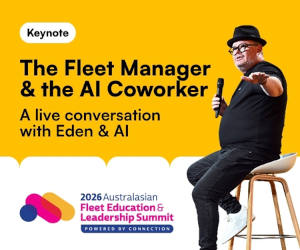

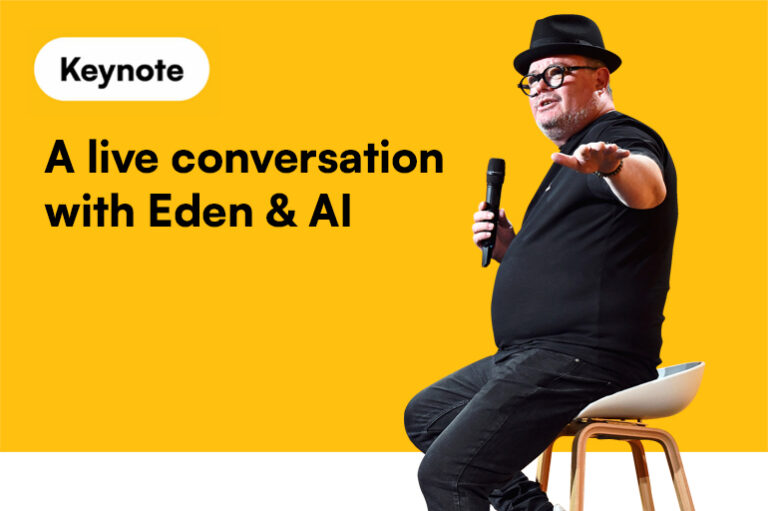
Last year, Eden Shirley, Founder of FleetGuru, captured attention at the Australasian Fleet Education and Leadership Summit with a live demonstration of artificial intelligence in action. The session showcased the practical potential of AI in fleet maintenance and left many delegates reflecting on how quickly technology is evolving.
This year, Shirley is returning with a different objective.
Not a product launch. No PowerPoint slides. This will be a live conversation with artificial intelligence to reimagine the daily work of fleet professionals across operations, maintenance, and supply chain management.
The keynote is designed to challenge assumptions and highlight new ways of interacting and working with AI in fleet environments.
From Demonstration to Education
The 2026 keynote reflects a deliberate shift in focus, from showcasing technology to exploring how people can work alongside it.
Rather than promoting a specific solution, the session aims to encourage critical thinking about how AI will fit into everyday operations.
Shirley made it clear that the presentation will not be centred on a product demonstration.
“I’m not even showing the FleetGuru product. We didn’t even put our logo on it. I’m quite literally just going, let’s have a conversation with an AI on a stage.”
This approach aligns closely with the purpose of the Australasian Fleet Education and Leadership Summit, to provide practical learning that helps fleet leaders prepare their organisations for change.
The session will demonstrate how artificial intelligence can move beyond a chatbot on your computer to analysing data, performing tasks, and supporting decisions in real time.
A Practical Look at the Future of Fleet Work
One of the central themes of the keynote is that artificial intelligence is becoming embedded in workflows rather than existing as a separate application.
In practical terms, the next phase of AI is about enabling action rather than simply providing information.
“These days, you can literally send a text message to prompt AI to go off and do stuff.”
For fleet managers, this shift has direct operational implications. Tasks that currently require manual intervention, such as reviewing maintenance history, generating reports, or coordinating service providers, can increasingly be supported by automated processes.
Examples discussed during planning for the session include:
- Reviewing maintenance data to identify unusual patterns
- Comparing component replacement timing against fleet averages
- Generating maintenance reports or compliance documentation
- Scheduling supplier interactions or follow-up actions
These are familiar activities for fleet and supply chain teams. The difference is that artificial intelligence has the potential to complete them faster and with greater consistency, provided the underlying data is reliable.
Why This Matters for Fleet Managers and Supply Chain Teams
Across the fleet industry, organisations are managing increasing volumes of information from telematics and maintenance records to procurement and safety reporting. At the same time, teams are expected to deliver higher service levels with limited resources.
That tension between workload and available time is becoming a defining challenge for fleet operations.
“Fleet Managers are time poor and data rich. AI is kind of the bridge between those two realities.”
For fleet leaders, the message is not that AI will replace roles. Instead, it will change how work is performed, reducing administrative effort while improving access to information.
The implications extend beyond the fleet department. Supply chain partners, maintenance providers, and procurement teams are all likely to experience changes in how information flows and decisions are made.
Understanding these changes early will help organisations prepare for the transition rather than react to it.
Balancing Opportunity with Digital Readiness
A recurring theme in industry discussions is that technology outcomes depend heavily on data quality and governance.
According to Shirley, artificial intelligence cannot deliver meaningful insights without a reliable foundation of structured information.
“Without the data, you’re really stuck with an LLM, which kind of understands what you’re saying, but doesn’t really have any structured historical data to base decisioning on.”
For fleet organisations, this reinforces established asset management principles, accurate records, consistent processes, and clear accountability.
These are not new challenges, but artificial intelligence increases their importance. Managing them effectively will be critical to achieving safe and sustainable outcomes.
A Session Designed to Challenge Thinking
The keynote will take an unconventional format: a live conversation between Eden Shirley and an AI system with dynamic responses via an internet connection.
The purpose is to show how human judgement and artificial intelligence can work together in real time.
Looking ahead, the session is intended to encourage delegates to reconsider how technology fits into daily operations and decision-making.
“It’s trying to open their minds that AI is kind of integrated into the way that they could work.”
For many attendees, the value of the session will lie in understanding what practical adoption could look like. Not in theory, but in the context of real fleet operations.
Why Fleet Leaders Should Attend
Artificial intelligence is already influencing vehicle technology, maintenance strategies, and supply chain management. The pace of change is accelerating, but adoption across the fleet sector remains uneven.
This keynote offers an opportunity to step back from vendor messaging and consider the broader operational impact.
Fleet Managers and supply chain professionals attending the 2026 Australasian Fleet Education and Leadership Summit can expect to leave with:
- A clearer understanding of how AI can support daily operations
- Practical ideas for integrating AI into existing workflows
- A realistic perspective on how technology may shape the future of fleet management
In an industry defined by reliability, safety, and long-term planning, understanding how emerging technologies will influence operations is becoming part of the leadership role.
The Fleet Manager and the AI Coworker Keynote to be delivered by Eden Shirley at 10:10am on Tuesday, May 19th at the 2026 AfMA Summit is designed to start that conversation.